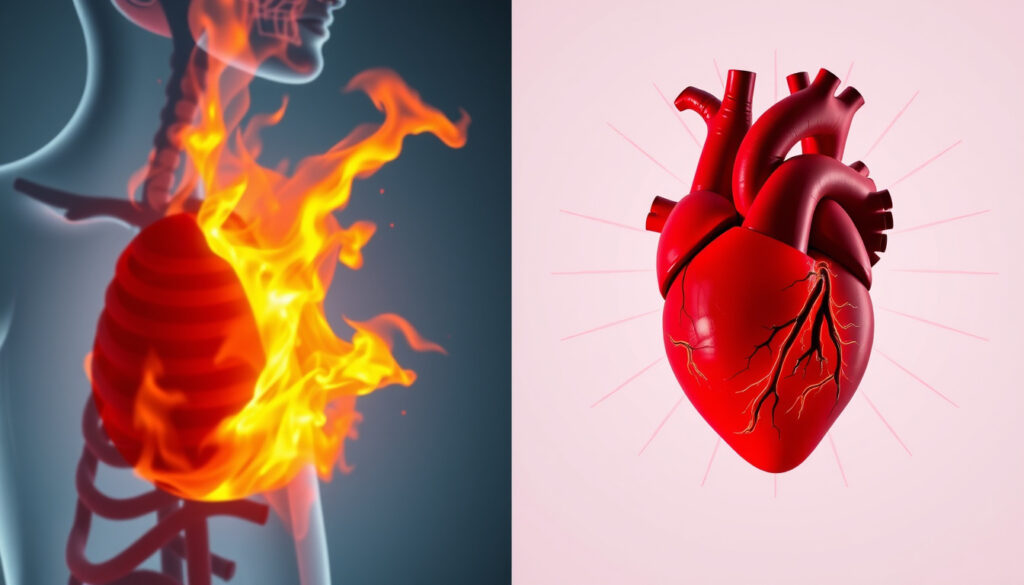
What Does Heartburn Feel Like – Symptoms vs Heart Attack
Heartburn is one of the most common digestive complaints, yet the sensation it produces remains poorly understood by many who experience it. The burning, sour-tasting discomfort that rises from the chest to the throat can be alarming, particularly when it mimics symptoms associated with more serious cardiac events. Understanding exactly what heartburn feels like, where it originates, and how it differs from other conditions is essential for both proper self-management and knowing when professional medical evaluation becomes necessary.
This guide provides a comprehensive look at heartburn symptoms based on current medical understanding and authoritative health sources. The information presented here draws from established medical institutions and is intended for educational purposes only. Anyone experiencing severe or persistent symptoms should consult a healthcare provider.
The term “heartburn” is somewhat misleading, as the condition has nothing to do with the heart itself. Instead, it describes a burning sensation in the chest that occurs when stomach acid flows backward into the esophagus—a tube that carries food from the mouth to the stomach.
What Does Heartburn Feel Like?
Describing heartburn to someone who has never experienced it can be challenging. The sensation varies from person to person but typically involves a constellation of uncomfortable feelings centered in the chest area.
Burning chest pain rising to throat
Behind breastbone, may radiate upward
20 minutes to 2 hours; worsens when lying down
Spicy/fatty foods, caffeine, bending over
Key Characteristics of the Sensation
The primary sensation of heartburn is a burning feeling that typically begins behind the breastbone, according to Massachusetts General Brigham. This discomfort often intensifies after eating and may become more pronounced when lying down or bending over. The burning sensation frequently travels upward toward the throat, creating a persistent warmth or heat that many describe as analogous to swallowing hot food that has “gotten stuck.”
Beyond the burning itself, several associated sensations commonly accompany heartburn. These include a bitter or acidic taste in the mouth, a sensation of food coming back up into the throat, and general chest discomfort that ranges from mild irritation to significant pain. Harvard Medical School notes that these additional symptoms help distinguish heartburn from other conditions affecting the chest area.
- Burning sensation typically starts behind the breastbone and moves upward
- Bitter or acidic taste develops in the mouth as stomach contents regurgitate
- Discomfort worsens after large meals, particularly when lying flat
- Bending over or straining often intensifies symptoms
- Pressure or tightness may accompany the burning in some individuals
- Bloating and general abdominal discomfort frequently occur
Snapshot of Common Heartburn Symptoms
| Symptom | Description |
|---|---|
| Pain Type | Burning, sometimes with sour taste |
| Common Location | Chest and throat area |
| Associated Symptoms | Regurgitation, difficulty swallowing, bloating |
| Warning Signs | When accompanied by shortness of breath: seek immediate medical attention |
Where Is Heartburn Pain Located?
Understanding the precise location of heartburn pain helps differentiate it from other conditions, particularly cardiac events. The discomfort associated with heartburn has a characteristic geographic pattern that, while uncomfortable, typically remains confined to specific anatomical regions.
Primary Pain Location
Heartburn pain originates in the chest, specifically behind the breastbone where the esophagus meets the stomach. According to Harvard Health Publishing, the burning sensation most commonly begins in this location and remains relatively localized. Unlike cardiac pain, which may radiate to distant areas, heartburn discomfort typically stays within the chest and throat region.
The discomfort may move upward along the esophagus, reaching toward the throat and potentially affecting the back of the mouth. UC Davis Health reports that patients frequently describe this upward movement as a warmth or burning that climbs from their chest toward their neck over several minutes.
Unlike heart attack pain, heartburn pain does not typically radiate to the shoulders, neck, arms, or jaw. This localization to the esophageal area is one of the most reliable methods for initial differentiation between digestive and cardiac sources of chest discomfort.
Can Heartburn Cause Chest Pain?
Yes, heartburn is characterized by chest pain, though its quality differs significantly from cardiac pain. The chest discomfort caused by heartburn typically presents as a burning, gnawing, or sour sensation rather than the crushing pressure associated with heart attacks. Houston Methodist Hospital notes that while the pain can be intense and concerning, it rarely involves the radiating quality seen with cardiac events.
Some individuals report that heartburn-related chest pain feels like a squeezing or constriction, which can increase concern about potential cardiac involvement. However, the absence of radiation to the arms, neck, or jaw, combined with the presence of sour taste and regurgitation, typically points toward a digestive rather than cardiac origin.
Heartburn vs. Heart Attack: Key Differences
One of the most important reasons to understand heartburn symptoms is to distinguish them from those of a heart attack. While the two conditions can produce similar-sounding descriptions, their underlying causes and required responses differ dramatically.
Understanding the Fundamental Differences
Despite producing overlapping symptoms, heartburn and heart attacks are entirely unrelated conditions. UC Davis Health clarifies that heartburn results from stomach acid flowing backward into the esophagus, while a heart attack occurs when arteries delivering blood to the heart become blocked. This mechanistic difference explains why the symptoms, while occasionally similar, follow distinct patterns.
Comparing the Two Conditions
| Aspect | Heartburn | Heart Attack |
|---|---|---|
| Primary Sensation | Burning chest pain behind breastbone | Pressure, tightness, squeezing, or aching in chest or arms |
| Pain Location | Limited to esophagus; doesn’t radiate | Can spread to shoulders, neck, arms, jaw, or back |
| Associated Taste | Bitter or acidic taste present | No bad taste |
| Timing | Appears after large or spicy meals | Can occur at rest or with exertion |
| Worse When | Lying down or bending over | — |
| Other Symptoms | Bloating, burping, regurgitation | Nausea, shortness of breath, cold sweats, fatigue |
When the Sensation Points to a Heart Attack
A heart attack typically produces pressure, tightness, squeezing, or constriction rather than the burning associated with heartburn. Massachusetts General Brigham emphasizes that while heartburn discomfort remains localized, heart attack pain characteristically radiates to the left shoulder, arm, neck, jaw, or back. This radiation pattern is one of the most telling distinguishing features between the two conditions.
Additional heart attack symptoms that typically do not accompany heartburn include cold sweats, unusual fatigue, lightheadedness, irregular heartbeat, and nausea. The Mayo Clinic notes that heart attack symptoms may develop suddenly during physical exertion or extreme stress, though they can sometimes build gradually over days or weeks before the acute event.
If you are uncertain whether you are experiencing heartburn or a heart attack, call 911 immediately. Medical professionals recommend erring on the side of caution: “If you feel like something isn’t right, you should be immediately evaluated in the emergency department.” Do not drive yourself to the hospital—seek emergency medical care instead.
What Triggers Heartburn and How Long Does It Last?
Heartburn symptoms do not occur randomly. They typically follow specific patterns related to eating habits, body position, and individual susceptibility factors. Understanding these triggers can help individuals manage and potentially prevent episodes.
Common Triggers
According to Harvard Health Publishing, the most common heartburn triggers include eating large or spicy meals, lying down shortly after eating, and bending over. These activities all increase pressure on the stomach or allow gravity to work against the digestive process, promoting the backward flow of stomach acid.
Other frequently reported triggers include consumption of caffeine, alcohol, fatty foods, chocolate, peppermint, and citrus products. UC Davis Health notes that smoking, obesity, pregnancy, and certain medications can also increase susceptibility to heartburn episodes.
Typical Duration of Heartburn Episodes
The duration of heartburn varies considerably depending on the individual and the specific circumstances. Episodes typically begin within 30 to 60 minutes after eating and may persist for 20 minutes to two hours or longer. The Mayo Clinic advises that symptoms often peak when lying down and may resolve more quickly when sitting upright or standing.
Both heartburn and heart attack can produce discomfort that subsides temporarily, making duration alone an unreliable distinguishing factor. Even if symptoms fade, individuals experiencing potential cardiac warning signs should still seek medical evaluation.
Typical Heartburn Timeline
- Onset: Typically occurs 30 to 60 minutes after eating, particularly after large or spicy meals
- Peak: Discomfort intensifies when lying down or bending over, usually within 1-2 hours
- Resolution: Symptoms often improve with upright positioning, antacids, or time; typically resolves within minutes to several hours
When to See a Doctor for Heartburn
While occasional heartburn is common and often manageable with over-the-counter treatments, certain circumstances warrant professional medical evaluation. Understanding when to seek care is crucial for maintaining digestive health and ruling out more serious conditions.
Symptoms occur more than twice weekly, interfere with sleep, persist despite over-the-counter medications, or are accompanied by difficulty swallowing, persistent nausea, or unexplained weight loss. Any chest pain that might possibly be cardiac in origin should receive immediate emergency evaluation.
Relief Strategies
For mild to moderate heartburn, several self-care approaches can provide relief. Avoiding trigger foods, eating smaller meals, and waiting at least three hours before lying down represent foundational lifestyle modifications. Houston Methodist recommends keeping the head elevated during sleep and maintaining a healthy weight to reduce abdominal pressure.
Over-the-counter antacids, H2 blockers, and proton pump inhibitors can provide varying degrees of relief depending on symptom severity. For persistent or severe cases, prescription medications and further diagnostic evaluation may be necessary.
Understanding Heartburn in Context
Heartburn serves as the primary symptom of gastroesophageal reflux disease (GERD), a condition affecting millions worldwide. The underlying mechanism involves a weakened or relaxed lower esophageal sphincter, the muscular valve that normally prevents stomach contents from flowing backward into the esophagus.
Several factors can contribute to sphincter dysfunction and increased heartburn susceptibility. Does Dose For Your Liver Work – Evidence And Consumer Data explores related health topics that may interest those managing digestive concerns. Obesity, pregnancy, hiatal hernia, smoking, and certain medications all increase the likelihood of experiencing heartburn symptoms.
For those wondering what causes acid reflux, the condition stems from the same mechanism as heartburn—the backflow of stomach contents into the esophagus.
What We Know vs. What Remains Unclear
| Established Information | Areas of Uncertainty |
|---|---|
| Heartburn produces burning chest pain behind the breastbone that may rise toward the throat | Why some individuals experience severe symptoms while others with similar triggers have mild discomfort |
| Bitter or acidic taste accompanies the burning due to stomach acid regurgitation | The precise role of diet in long-term GERD management remains incompletely understood |
| Lying down and bending over worsen symptoms by promoting acid reflux | Optimal timing for lifestyle interventions relative to symptom development |
| Symptoms improve with upright positioning and antacids | Individual variation in treatment response among available medications |
Expert Perspectives on Heartburn
Medical professionals consistently emphasize the importance of proper symptom recognition and appropriate care-seeking behavior. The distinction between digestive and cardiac sources of chest discomfort represents a critical area of health literacy that can literally save lives.
“If you feel like something isn’t right, you should be immediately evaluated in the emergency department.”
— Massachusetts General Brigham
Health authorities across multiple institutions stress that when doubt exists about whether symptoms represent heartburn or a cardiac event, seeking emergency care is always the safest choice. The potential consequences of ignoring heart attack symptoms far outweigh any inconvenience associated with seeking evaluation that turns out to be unnecessary.
Summary: Key Takeaways
Heartburn produces a characteristic burning sensation behind the breastbone that may rise toward the throat, often accompanied by a bitter or acidic taste. Unlike heart attack pain, heartburn discomfort typically remains localized and does not radiate to the arms, shoulders, neck, or jaw. The condition is triggered by eating, particularly large or spicy meals, and worsens when lying down or bending over.
While occasional heartburn is common and often manageable with lifestyle modifications and over-the-counter treatments, persistent symptoms, frequent episodes, or any chest discomfort that might potentially have a cardiac origin requires professional medical evaluation. Understanding these distinctions helps individuals make appropriate decisions about self-care versus professional care.
For those interested in related health topics, Why Is My Period Blood Brown – Causes and When to Worry provides additional information about bodily symptoms and when they warrant concern.
Frequently Asked Questions
Can heartburn cause chest pain?
Yes, chest pain is a hallmark symptom of heartburn. The discomfort typically presents as a burning sensation behind the breastbone, though some individuals describe it as pressure or tightness. Unlike cardiac chest pain, heartburn-related chest discomfort usually does not radiate to the arms, shoulders, or jaw.
How long does heartburn last?
Heartburn episodes typically last from 20 minutes to 2 hours, beginning within 30 to 60 minutes after eating. Symptoms often peak when lying down and may resolve more quickly when sitting upright or taking antacids. Chronic GERD-related heartburn may persist for longer periods.
Does heartburn feel like indigestion?
Heartburn and indigestion share similarities and often occur together, but they are distinct conditions. Indigestion typically involves discomfort in the upper abdomen, bloating, and gas, while heartburn specifically describes the burning sensation that travels from the chest toward the throat.
What does acid reflux feel like?
Acid reflux produces a burning sensation in the chest (heartburn) along with a sour or bitter taste in the mouth when stomach contents flow backward into the esophagus. Many people describe a feeling of food coming back up, particularly when lying down after eating.
Does heartburn feel like a heart attack?
While both conditions can cause chest discomfort, they feel different. Heartburn produces burning pain that typically remains localized to the chest and throat. A heart attack usually causes pressure, tightness, squeezing, or aching that may radiate to the arms, shoulder, neck, or jaw. When uncertain, seek emergency care immediately.
Where do you feel heartburn?
Heartburn is felt primarily behind the breastbone in the chest area, with the sensation often rising upward toward the throat. Unlike cardiac pain, it does not typically radiate to the shoulders, arms, neck, or jaw. Some individuals also experience discomfort in the upper abdomen.
How do you know if it’s heartburn or a heart attack?
Heartburn typically occurs after eating, produces burning rather than pressure, and is accompanied by a sour taste or sensation of food returning to the throat. Heart attack symptoms include crushing chest pressure, radiation to the arms or jaw, shortness of breath, and cold sweats. When uncertain, err on the side of caution and seek emergency evaluation.
What triggers heartburn?
Common triggers include eating large or spicy meals, consuming caffeine, alcohol, or fatty foods, lying down shortly after eating, bending over, and experiencing stress. Obesity, pregnancy, smoking, and certain medications can also increase susceptibility to heartburn episodes.
More related posts
 Normal Socket After Tooth Extraction vs Dry Socket: Healing & Red Flags
 Chlamydia Bumps on Tongue: Symptoms, Causes, and Treatment
 Is There Mail Delivery Today? An Post, USPS & Royal Mail
 Apothecary Diaries Season 2: Episodes, Dates, Where to Watch
 Siding Installation Near Me: Costs, DIY Tips & Best Contractors
 How to Schedule a Text on iPhone: Send Later Guide
 Matthew 11:28 – Meaning Context and Rest Explained
 Spanish to English Translate: Free Tools, Apps & Accuracy