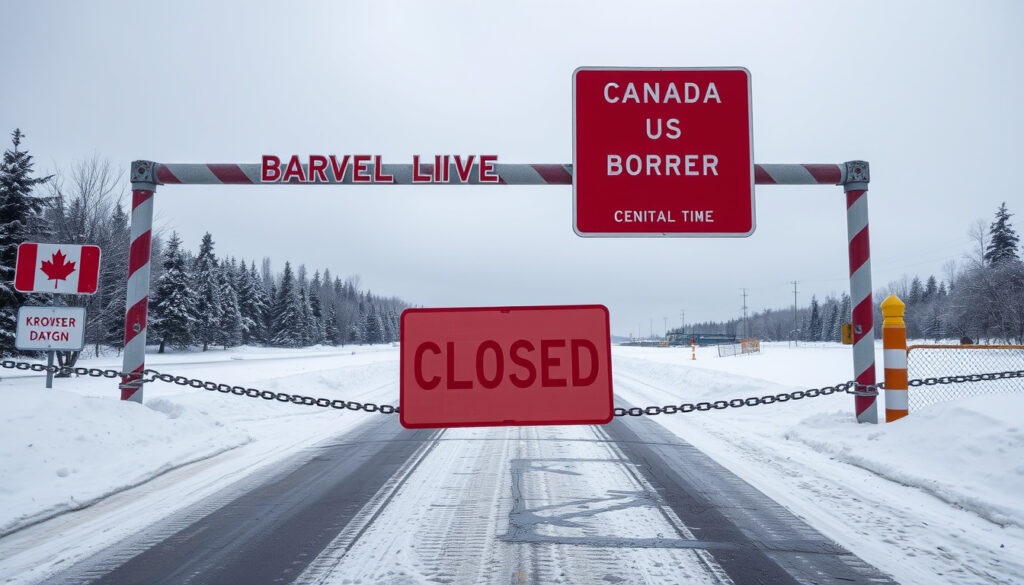
Canada Freezes US Travel – What Travelers Need to Know
Reports circulating online have prompted widespread questions about whether Canada has frozen travel to the United States. Official sources from both governments confirm that no such policy exists. Canadians continue to face entry requirements to the US, but there are no Canadian-imposed restrictions preventing travel.
What has changed instead is a set of new US enforcement measures targeting foreign nationals, including Canadians, along with heightened scrutiny at the border. These changes have contributed to a significant drop in cross-border travel throughout 2025.
What Canada Has and Has Not Implemented
Government of Canada travel advisories confirm that Ottawa has not announced any travel freeze, border closure, flight suspension, or ban targeting US citizens or travelers. Official channels including travel.gc.ca and the Canada Border Services Agency make no mention of such restrictions.
The Canadian government website continues to outline standard entry procedures for travelers entering Canada, with no additional permits or approvals required for US citizens beyond standard documentation.
Canada has not imposed a travel freeze on US travelers. Official sources from the Government of Canada show no policies matching the queried terms such as “travel freeze,” “border closure,” or “US travelers banned.”
Overview of Current Travel Rules
Standard entry applies, no visa required for stays under 180 days
Visa-exempt for up to 6 months; new registration rules apply for longer stays
No Canadian-imposed flight halts or suspensions in effect
All crossing points remain open in both directions
Key Facts at a Glance
- Canada has not announced any travel freeze targeting US travelers or citizens
- No border closures or flight suspensions have been issued by Canadian authorities
- US citizens require standard documentation to enter Canada (proof of citizenship, no visa under 180 days)
- Canadians traveling to the US face new US-imposed rules and enforcement measures
- Cross-border travel has declined significantly, driven by US policy uncertainty rather than Canadian restrictions
- Official advisories from both governments reference only standard entry requirements and US enforcement changes
| Policy Area | Status | Source |
|---|---|---|
| Canadian travel freeze on US citizens | Not implemented | travel.gc.ca |
| Border closure by Canada | Not implemented | CBSA official site |
| Flight suspension Canada-US | Not implemented | Air Canada advisories |
| US entry restrictions on Canadians | New measures in effect | White House proclamation |
| Biometric requirements Canadians | Effective Dec 26, 2025 | US CBP |
| 30-day registration rule | Enforced since 2025 | INA §262 |
US Enforcement Changes Affecting Canadians
While Canada has not imposed travel restrictions, the United States has introduced several new measures that directly affect Canadian travelers heading south. These changes represent the most significant shift in cross-border travel rules in recent years.
30-Day Registration Requirements
Effective 2025, Canadians staying 30 or more consecutive days in the United States must now register electronically through the I-94 system or by submitting Form G-325R. This requirement stems from Immigration and Nationality Act Section 262, which had previously been loosely enforced for land tourists. The change marks a substantial shift in how US authorities track Canadian visitors on extended stays.
Biometric Entry-Exit Program
Beginning December 26, 2025, all Canadians entering or exiting the United States at air, land, and sea ports will be required to provide facial photographs. Fingerprint collection may also occur in certain circumstances. This biometric data collection applies to both entry and exit procedures, creating a comprehensive digital record of cross-border movements.
US border enforcement has intensified, including increased device searches, detailed vehicle inspections, and heightened scrutiny for dual citizens—particularly those holding passports from countries on security watchlists. Some travelers have faced refusals that resulted in loss of visa-exempt status.
Entry Restrictions on Certain Nationals
US Presidential Proclamation 14161, issued January 20, 2025, suspended entry for nationals of several countries. Importantly, Canadian passport holders remain exempt from these restrictions, including dual citizens traveling on their Canadian documents. The White House announcement specifically carves out Canadian travelers from these measures.
Travel Trends and Economic Impact
Despite the absence of Canadian travel restrictions, cross-border travel has declined substantially throughout 2025. Canadian trips to the United States have dropped for more than ten consecutive months, with double-digit decreases compared to 2024 figures.
Border communities have experienced particularly sharp declines, with some regions reporting approximately 20 percent fewer crossings than previous years. Local economies in areas dependent on cross-border tourism have felt the impact of this sustained downturn.
Factors Driving the Decline
Analysts point to US policy uncertainty and enhanced enforcement measures as primary drivers of reduced travel. Canadian travelers have expressed concerns about longer wait times, more invasive searches, and uncertainty about how new registration requirements might affect their travel plans. There is no indication that the decline stems from any Canadian government action or advisory.
Travel patterns show no signs of rebounding, with industry observers suggesting that heightened enforcement may have created a lasting shift in traveler behavior. Those who regularly crossed the border for shopping, visits, or short trips have in many cases reduced their frequency or sought alternative destinations.
Travelers facing impacted plans due to US enforcement changes may find relevant information through airline advisories. Flight Attendants Air Canada Strike – Latest Status and Flight Updates provides current information on operational disruptions that may affect cross-border travel arrangements.
Comparing Current Changes to Historical Restrictions
The 2025 changes differ fundamentally from the border restrictions implemented during the COVID-19 pandemic. Where pandemic-era closures involved complete shutdowns of crossing points and categorical prohibitions on non-essential travel, current measures are procedural and security-focused.
No source material draws direct parallels to COVID-era restrictions. The distinction matters for travelers trying to understand what rights and options they retain. Border crossings remain fully operational, and Canadian authorities have issued no restrictions on outbound travel.
Documentation Requirements
Standard documentation remains the primary requirement for cross-border movement. US citizens entering Canada need only provide proof of citizenship, with no visa required for stays up to 180 days. The US State Department confirms these standard procedures continue unchanged.
Timeline of Relevant Policy Developments
Several distinct developments have shaped the cross-border travel landscape in 2025. While no Canadian restriction occurred, US measures have evolved throughout the year.
- January 20, 2025: US Presidential Proclamation 14161 introduces entry restrictions for nationals of certain countries; Canadian passport holders exempted
- Early 2025: 30-day electronic registration requirement for Canadians takes effect under INA §262
- Throughout 2025: Enhanced border enforcement observed, including increased device searches and vehicle inspections
- December 26, 2025: Biometric entry-exit program launches, requiring facial photos from all Canadian travelers
- Ongoing: Double-digit declines in Canadian travel to US persist through year-end
Established Facts Versus Remaining Questions
Available sources confirm certain elements of the current situation while leaving other aspects uncertain.
| What Is Confirmed | What Remains Uncertain |
|---|---|
| Canada has not imposed a travel freeze | Whether future Canadian advisories will change |
| No Canadian border closures or flight bans | Long-term trajectory of US enforcement levels |
| US 30-day registration rule in effect for Canadians | Whether additional registration expansions will occur |
| Biometric collection begins December 26, 2025 | Specific scope of biometric data retention |
| Double-digit travel decline ongoing | Economic impact severity on border communities |
| Canadian passport holders exempt from US entry bans | Potential reciprocal US policy changes |
Background on Canada-US Travel Relations
The Canada-US border represents one of the world’s longest unguarded frontiers, with a history of relatively open movement between the two countries. Before 2025, Canadians enjoyed straightforward access to the United States for tourism, business, and family visits without the registration requirements now in place.
The relationship between the two countries has historically facilitated significant cross-border traffic, with millions of trips recorded annually in pre-pandemic years. The current changes, while not restrictions in the traditional sense, represent a meaningful shift in how the US manages Canadian visitor flows.
Canadian government advisories have responded to US enforcement changes by warning travelers about increased scrutiny, particularly regarding device searches and dual-citizenship considerations. These advisories serve as informational guidance rather than prohibition.
Official Sources and Government Statements
Government of Canada sources remain the authoritative reference for Canadian travel policies. The official travel advisory page at travel.gc.ca confirms standard entry procedures with no mention of restrictions.
“Canadian citizens do not require a visa to travel to the United States for stays of up to six months. A valid Canadian passport is required for entry.”
— Government of Canada travel advisory
The US State Department’s advisory for Canada confirms reciprocal standard entry provisions for US citizens visiting Canada, noting that proof of citizenship suffices for stays under 180 days without a visa requirement.
“U.S. citizens do not need a visa to travel to Canada if they are traveling with a U.S. passport that is valid for at least six months from the date of entry.”
— US State Department international travel advisories
What Travelers Should Know
For those planning cross-border travel, several practical considerations apply. Canadians traveling to the United States should ensure their passports meet validity requirements and understand that extended stays now require electronic registration. All travelers should anticipate enhanced questioning and documentation verification at border crossings.
Those with dual citizenship should carry documentation for both nationalities and be prepared to explain travel history and purposes. Device searches have increased, and travelers should ensure their electronic devices contain no material that might raise concerns during inspection.
Travelers seeking destination alternatives may find relevant information through various travel guides. For those interested in entertainment options closer to home, Six Flags St Louis – Hours, Tickets, Rides and Guide offers information on domestic attractions.
Verify current entry requirements through official government channels before travel. Ensure all documentation is current and accessible. Consider registering longer stays through official US systems as required.
Summary
Canada has not frozen travel to the United States. Official government sources confirm the absence of any Canadian-imposed travel freeze, border closure, or flight suspension. What has changed are US enforcement measures affecting Canadians entering the United States, including new registration requirements for extended stays and biometric collection at border crossings.
Cross-border travel has declined significantly throughout 2025, but this decline stems from US policy uncertainty and enforcement intensity rather than Canadian restrictions. Both governments continue to maintain open borders for permitted travel, though enhanced procedures now apply to Canadian visitors entering the United States.
Frequently Asked Questions
Has Canada actually frozen travel to the United States?
No. Official sources from the Government of Canada confirm no travel freeze, border closure, or flight suspension has been implemented. Canadians can still travel to the US with standard documentation.
What new rules affect Canadians entering the United States?
Canadians staying 30 or more consecutive days must now register electronically through the I-94 system. Additionally, biometric data collection began December 26, 2025, requiring facial photos at ports of entry.
Do US citizens need a visa to enter Canada?
No. US citizens require only proof of citizenship, such as a valid US passport, to enter Canada for stays up to 180 days. No visa is required for tourism or short-term visits.
Are there any restrictions on Canadians due to the US entry bans?
Canadian passport holders, including dual citizens traveling on Canadian passports, are exempt from US entry restrictions announced under Presidential Proclamation 14161.
Why has cross-border travel declined if Canada has no restrictions?
Travel declines are attributed to US policy uncertainty and enhanced enforcement measures, including increased border scrutiny, device searches, and registration requirements. These changes have made some Canadians reconsider or reduce their travel to the United States.
What documents do Canadians need for US entry?
Canadians need a valid passport. Enhanced border enforcement may involve additional questioning about travel purpose, length of stay, and prior travel history. Dual citizens should carry documentation for both nationalities.
Can Canadians get refunds if they cancel trips due to border concerns?
Airline and accommodation refund policies vary by provider. No Canadian government mandate requires refunds for travel cancelled due to border concerns. Travelers should check individual provider policies.
Where can I find official current travel information?
Current official information is available through travel.gc.ca for Canadian advisories and state.gov for US travel information.
More related posts
 Doc (2025 TV Series): Episodes, Cast, Where to Watch & Season 2
 Hamnet (2025 film): True story, cast, and release date
 Tini Mac and Cheese Recipe: Viral TikTok Layers of Cheese
 Robert F. Kennedy: Assassination, Legacy & RFK Jr.’s Brain Worm
 Kathryn Hahn Movies and TV Shows: Full Filmography
 How to Clear Cache on Any Device: Android, iPhone, Brow er
 Timberwolves vs Memphis Grizzlies Match Player Stats – Box Score and Top Performers