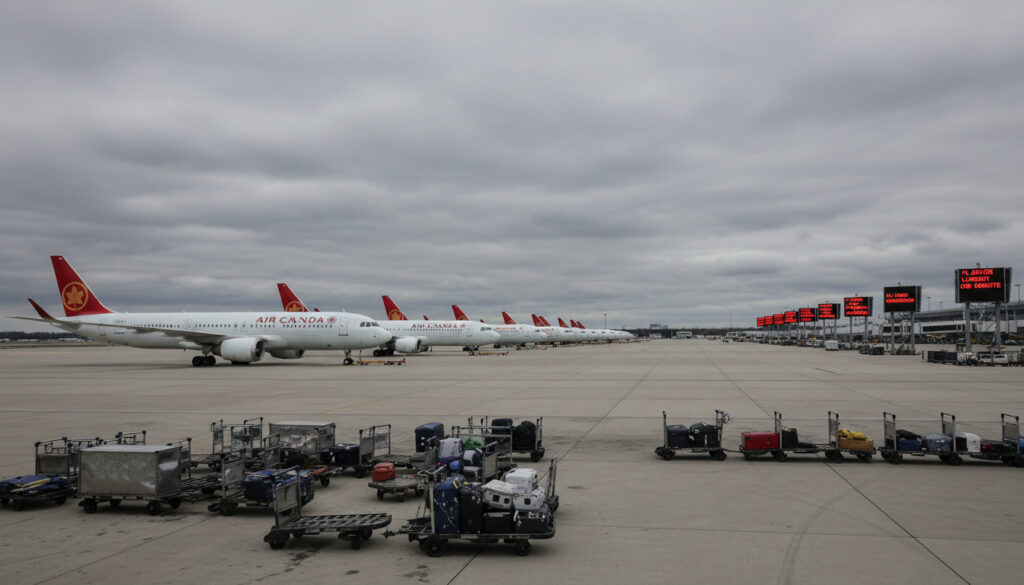
Flight Attendants Air Canada Strike – Latest Status and Flight Updates
Over 10,000 Air Canada flight attendants represented by the Canadian Union of Public Employees (CUPE) walked off the job in August 2025 following the collapse of year-long contract negotiations. The work stoppage began on August 16 after the union issued a 72-hour strike notice and the airline responded with an immediate lockout, grounding hundreds of flights and stranding approximately 130,000 daily passengers.
A tentative agreement reached on August 19 ended the four-day strike, allowing partial service resumption. However, union members overwhelmingly rejected the wage component of that deal on September 6, 2025, with 99.1% voting against the offer. The dispute has since entered a government-imposed mediation phase, with binding arbitration possible if talks remain deadlocked.
Are Air Canada Flight Attendants on Strike? Latest Status Update
As of early September 2025, the active strike has concluded, but the underlying labor dispute remains unresolved. Flight operations have stabilized under a legal framework that prohibits further work stoppages while mediation proceeds.
Strike ended August 19; mediation ongoing; no service disruptions permitted
CUPE Flight Attendants Component
Over 10,000 flight attendants
Fully resumed August 19; Air Canada Express unaffected throughout
- 99.7% of members authorized strike action before August 2025
- 99.1% rejected the tentative wage offer on September 6, 2025
- Air Canada proposed total compensation increases of approximately 40% over four years
- First-ever specific ground pay provisions included in rejected deal
- Air Canada Express (Jazz and PAL) maintained 100% operations during the dispute
- No-strike clause currently prevents further walkouts during mediation
| Union | CUPE Flight Attendants Component |
| Total Members | 10,000+ |
| Strike Vote Mandate | 99.7% approval |
| Previous Contract Expiry | March 2025 |
| Strike Commenced | August 16, 2025 |
| Tentative Agreement | August 19, 2025 |
| Wage Offer Rejection | 99.1% (September 6, 2025) |
| Current Process | Mediation with potential arbitration |
| Peak Daily Impact | ~130,000 passengers |
| Government Minister | Patty Hajdu (Jobs and Workforce Development) |
Why Are Air Canada Flight Attendants Striking? Key Demands and Background
The dispute centers on compensation gaps that flight attendants argue have widened relative to industry standards and inflation. CUPE targeted wages matching those at Air Transat, which secured industry-leading rates in 2024, alongside demands for full pay during ground duties previously performed without compensation.
What Pay and Working Conditions Did CUPE Demand?
Union negotiators sought parity with Air Transat’s post-2024 contract rates, which established new industry highs. A central grievance involved ground pay—compensation for pre-flight and post-flight duties such as boarding, safety checks, and deplaning that historically went unpaid or underpaid. CUPE characterized Air Canada’s proposals as falling below inflation, market standards, and minimum wage benchmarks in certain calculations.
The August 19 tentative agreement marked the first time Air Canada offered specific ground pay provisions separate from flight hour calculations, a significant structural change from the previous decade’s contract.
How Did Air Canada Respond to Union Demands?
The airline countered with a proposal totaling roughly 38% compensation increases over four years, including 25% in the first year alone. This package included ground pay, pension enhancements, extended benefits, and improved crew rest provisions. Air Canada maintained this would have made its flight attendants the best compensated in Canada.
Air Transat’s 2024 contract settlement established new compensation ceilings that CUPE used as leverage, arguing Air Canada—Canada’s largest carrier—should match or exceed regional competitor standards.
Despite the non-wage improvements, the union viewed the overall package as insufficient, leading to the September 6 rejection.
Should mediation fail, binding arbitration imposed by the federal government would remove the union’s ability to strike and the airline’s ability to lock out, with a third party determining final wage rates.
Will the Air Canada Strike Affect Flights? Travel Impact and Rights
The August 2025 strike caused immediate, widespread cancellations before the rapid settlement limited long-term damage. Travelers retain specific rights regarding refunds and rebooking, though current operations face no restrictions.
Which Flights Were Cancelled During the August Disruption?
Air Canada and Rouge flights experienced phased cancellations beginning August 14, culminating in full suspension by August 16. The four-day work stoppage affected approximately 130,000 daily passengers, including 25,000 Canadians stranded abroad. Air Canada Express, operated by Jazz and PAL Airlines, carried roughly 20% of the airline’s passenger volume and continued normal operations throughout the dispute.
What Compensation and Rebooking Options Exist for Passengers?
Affected travelers received proactive notifications, full refunds, and flexible rebooking at no additional cost during the August stoppage. Air Canada stated it met all regulatory obligations for cancellations and delays under federal passenger protection rules. Current ticket holders face no disruption risks under the mediated settlement terms.
Travelers monitoring future developments can calculate potential impact windows using date tools like What Is 90 Days From Today – Free Calculator and Exact Date to track mediation timelines.
When Is the Air Canada Flight Attendants Strike Starting?
While the strike already occurred in August 2025, the timeline of events leading to the work stoppage and subsequent mediation reveals a pattern of escalating pressure tactics and rapid government intervention.
- Pre-August 2025: The previous decade-long contract expired in March 2025; 99.7% of CUPE members voted to authorize strike action.
- August 11, 2025: Air Canada offered a 38% total compensation increase over four years plus ground pay, pensions, and benefits, alongside a proposal for binding arbitration that CUPE rejected.
- August 13, 2025: CUPE issued a 72-hour strike notice effective August 16; Air Canada simultaneously issued a lockout notice and requested federal arbitration.
- August 14–16, 2025: Phased cancellations began, grounding most Air Canada and Rouge flights by August 16.
- August 16, 2025: The strike and lockout formally commenced, stranding approximately 130,000 daily passengers.
- August 19, 2025: A tentative agreement ended the strike after government-mediated talks; some flights resumed immediately.
- August 27–September 6, 2025: The ratification vote occurred, resulting in 99.1% rejection of the wage portion.
- September 6, 2025 onwards: Mediation began on wages with arbitration as a fallback option.
What Remains Uncertain About the Air Canada Flight Attendants Dispute?
Despite the return to work, significant questions persist regarding the final resolution of wage disputes and the timeline for reaching a durable contract.
| Established Facts | Unresolved Elements |
|---|---|
| Strike concluded August 19, 2025 with a tentative agreement | Final arbitrated wage rates, if mediation fails |
| 99.1% member rejection of wage offer on September 6 | Timeline for mediation completion |
| No-strike clause prohibits further disruptions during mediation | Whether non-wage provisions require renegotiation |
| Air Canada Express operations remained unaffected throughout | Long-term impact on labor relations at the carrier |
| Government binding arbitration framework imposed by Minister Hajdu | Specific arbitration panel composition and precedents to be used |
How Did the Air Canada Flight Attendants Strike Develop?
The confrontation followed a decade of labor peace under a 10-year contract that expired in March 2025. As bargaining stalled through the spring and summer, the union secured an overwhelming strike mandate. The federal labor framework typically encourages settlement, but Minister Patty Hajdu intervened with binding arbitration and return-to-work orders when the August strike began, citing precedents from recent rail and port disputes.
The rapid four-day duration of the actual strike reflected intense government pressure and the economic cost of grounding Canada’s largest airline. The subsequent rejection of the wage component suggests a significant gap between what the union membership considers fair compensation and what the airline views as financially sustainable, setting the stage for potential arbitration.
What Are Official Sources Saying About the Air Canada Strike?
Conflicting narratives emerge from the primary parties regarding the adequacy of the rejected offer and the path forward.
“The agreement reached with the mediator would have made Air Canada flight attendants the best compensated in Canada, with transformational improvements including first-ever specific ground pay.”
— Air Canada Media Relations, September 6, 2025 Update
“The offer remains below inflation, below market rates, and in some calculations below minimum wage when accounting for unpaid ground time.”
— CUPE Representatives, via Documented Negotiation Positions
“Binding arbitration ensures economic certainty while preventing further disruption to the traveling public during peak summer season.”
— Federal Government Position, CBC News Archives
What Should Travelers Monitor Next?
Passengers should verify flight status directly through Air Canada’s official channels, as mediation proceedings could theoretically extend through the fall if arbitration becomes necessary. While no immediate cancellations are permitted, understanding What Is 90 Days From Today – Exact Date and Calculation Guide may help travelers assess potential resolution timelines based on standard mediation windows.
Frequently Asked Questions
Who represents Air Canada flight attendants?
The Canadian Union of Public Employees (CUPE) represents over 10,000 Air Canada flight attendants through its Flight Attendants Component.
How long did the 2025 Air Canada flight attendants strike last?
The active strike and lockout lasted four days, from August 16 to August 19, 2025, before a tentative agreement ended the work stoppage.
What percentage of workers rejected the wage offer?
On September 6, 2025, 99.1% of voting members rejected the wage portion of the tentative agreement, with 99.4% of eligible members participating in the vote.
Did Air Canada Express flights operate during the strike?
Yes. Air Canada Express, operated by Jazz Aviation and PAL Airlines, maintained 100% of its flights throughout the August 2025 disruption.
What government intervention occurred?
Jobs Minister Patty Hajdu imposed binding arbitration and a return-to-work order under federal labor law provisions, citing economic necessity and precedents from transport sector disputes.
Are future flight cancellations expected?
No. Federal mediation rules prohibit further strikes or lockouts while the process continues, protecting current flight schedules from disruption.