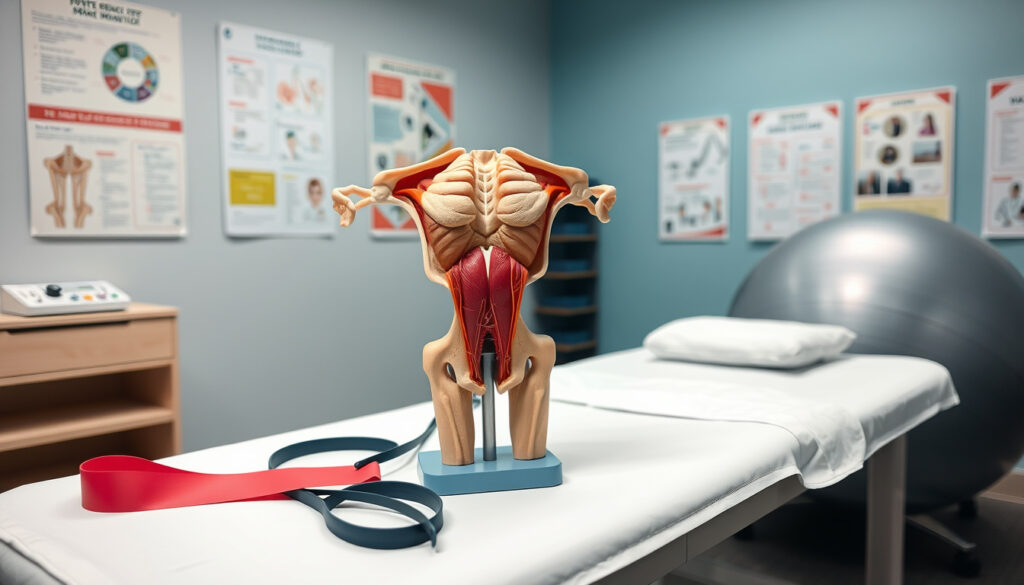
Pelvic Floor Physical Therapy: What to Expect & Exercises
If you’ve ever sneezed and felt a small leak, or avoided jumping because of pelvic pressure, you’re not alone. Pelvic floor disorders affect roughly 1 in 3 women, yet many don’t know that specialized physical therapy can often resolve symptoms without surgery.
Women affected by pelvic floor disorders: 1 in 3 ·
Typical reduction in incontinence symptoms with PT: up to 80% ·
Average number of PT sessions: 8–12 ·
Age when weakening often begins: 40s
Quick snapshot
- Specialized physiotherapy for pelvic floor muscles (Johns Hopkins Medicine)
- Addresses incontinence, prolapse, pain (Johns Hopkins Medicine)
- Includes internal and external assessment (Johns Hopkins Medicine)
- Non-surgical, evidence-based treatment (Johns Hopkins Medicine)
- Urinary and fecal incontinence (MedlinePlus, U.S. National Library of Medicine)
- Pelvic organ prolapse (MedlinePlus, U.S. National Library of Medicine)
- Chronic pelvic pain (MedlinePlus, U.S. National Library of Medicine)
- Dyspareunia (painful sex) (MedlinePlus, U.S. National Library of Medicine)
- Postpartum recovery (MedlinePlus, U.S. National Library of Medicine)
- Confidential history taking (APTA Pelvic Health)
- External and internal pelvic exam (with consent) (APTA Pelvic Health)
- Biofeedback or ultrasound for muscle awareness (APTA Pelvic Health)
- Personalized exercise plan (APTA Pelvic Health)
- Improved bladder and bowel control (Hinge Health, digital MSK clinic)
- Reduced pain and pressure (Hinge Health, digital MSK clinic)
- Enhanced sexual function (Hinge Health, digital MSK clinic)
- Better core stability and quality of life (Hinge Health, digital MSK clinic)
Five key statistics, one pattern: pelvic floor dysfunction is common, treatable, and often begins earlier than many realize.
| Statistic | Value |
|---|---|
| Percentage of women affected by pelvic floor disorders | 1 in 3 |
| Improvement rate for stress incontinence with PT | 70–80% (Hinge Health, digital MSK clinic) |
| Average number of sessions needed | 8–12 (Temple Health, academic medical center) |
| Age at which pelvic floor weakening often begins | 40s |
| Risk increase with vaginal childbirth | 2–3 times (Johns Hopkins Medicine) |
What do they do during pelvic floor physical therapy?
Initial assessment and history
- The first visit focuses on functional impairments and discussion of bowel, bladder, and sexual health (IU Health, Indiana University Health).
- Your therapist will ask about symptoms, childbirth history, surgeries, and lifestyle factors.
External and internal pelvic exam
- Assessment includes visual inspection of the external area and palpation of pelvic floor muscles (Foundation Physical Therapy).
- An internal exam is performed with a gloved, lubricated finger to assess muscle tone, strength, and trigger points. Consent and communication are required throughout (APTA Pelvic Health).
Patients who feel rushed or uninformed during the internal exam are less likely to continue therapy; therapists who prioritize communication see better adherence and outcomes.
Biofeedback and manual therapy
- Biofeedback uses sensors or ultrasound to help you see or feel your pelvic floor muscles contracting and relaxing (Johns Hopkins Medicine).
- Electrical stimulation therapy (10–20 minutes per session) can treat weakness, pain, and spasms (Motion Physical Therapy Group).
- Manual therapy includes internal and external techniques to release tight muscles and mobilize fascia.
Exercise prescription
- Treatment is personalized: strengthening, relaxation, or flexibility exercises based on your muscle function (Hinge Health, digital MSK clinic).
- Core stabilization, diaphragmatic breathing, and home exercise programs are integral parts of the plan (Motion Physical Therapy Group).
The implication: every component of pelvic floor PT is designed around your specific deficits. The internal exam is a standard, clinically necessary step—not something to fear.
What are signs of a weak pelvic floor?
Urinary incontinence
- Leaking urine when coughing, sneezing, laughing, or exercising is one of the most common signs (MedlinePlus, U.S. National Library of Medicine).
- Sudden, strong urges to urinate (urge incontinence) can also indicate pelvic floor dysfunction.
Pelvic organ prolapse
- A feeling of heaviness, pressure, or a bulge in the vagina suggests organs may be descending due to weak support.
Pain during sex
- Dyspareunia—painful sexual intercourse—often stems from pelvic floor tension or trigger points (Hinge Health, digital MSK clinic).
Lower back pain
- Chronic lower back pain can be linked to pelvic floor dysfunction because the muscles are part of the core stabilizer system (Temple Health, academic medical center).
Heaviness in the pelvis
- A persistent sensation of heaviness or pressure, often worse after standing or lifting, is another red flag.
Why this matters: many people dismiss these symptoms as normal aging or childbearing aftereffects. In reality, they are treatable. Recognizing the signs is the first step toward relief.
What are the 5 pelvic floor exercises?
Kegels
- Kegels involve contracting and holding the pelvic floor muscles (as if stopping urine flow), then fully relaxing (Johns Hopkins Medicine).
- They strengthen muscles for stress incontinence and can improve sexual health by enhancing circulation (Motion Physical Therapy Group).
Bridge
- Lying on your back with knees bent, lift your hips toward the ceiling while engaging glutes and core. This strengthens the posterior chain and indirectly activates the pelvic floor.
Squats
- Deep squats (as tolerated) engage the pelvic floor through coordinated breathing and intra-abdominal pressure. Start with body weight only.
Diaphragmatic breathing
- Inhale deep into your belly, allowing the pelvic floor to lower (relax). Exhale and gently lift the pelvic floor back up. This coordinates breath with muscle control (APTA Pelvic Health).
Pelvic tilts
- While on your back with knees bent, gently tilt your pelvis backward to flatten your lower back against the floor. This improves pelvic alignment and core engagement.
Doing Kegels without proper instruction can tighten already overactive pelvic floor muscles, worsening symptoms instead of helping. Professional evaluation first is key (Temple Health, academic medical center).
The trade-off: exercise quality matters more than quantity. A therapist can teach you the correct technique so you get the benefit without the risk.
How painful is pelvic floor therapy?
Typical sensation during internal exam
- Most patients describe the internal exam as “uncomfortable” but not painful. One patient told WebMD: “It was not painful, just a little uncomfortable” (WebMD, health information publisher).
Red flags that require medical attention
- Severe pain, sudden bleeding, or signs of infection are red flags and should be reported immediately (NIH, National Center for Biotechnology Information).
Managing discomfort
- Communication with your therapist is essential. They can adjust technique, use smaller instruments, or focus on external work initially.
- Sessions gradually become more comfortable as the muscles learn to relax.
Why this matters: fear of pain is the #1 reason people avoid pelvic floor PT. Knowing that discomfort is typically mild and that you are in control of the pace can remove that barrier.
At what age does your pelvic floor start to weaken?
Age-related changes
- Pelvic floor weakening often begins in the 40s due to natural loss of muscle mass and collagen changes (Johns Hopkins Medicine).
Pregnancy and childbirth
- Vaginal childbirth increases the risk of pelvic floor dysfunction by 2–3 times (Temple Health, academic medical center). Postnatal pelvic floor dysfunction affects 50–70% of women.
Menopause
- Estrogen loss during menopause thins pelvic tissues, reducing support and contributing to incontinence and prolapse.
Lifestyle risk factors
- Obesity, chronic coughing, heavy lifting, and high-impact exercise can accelerate weakening. Pelvic floor PT can benefit people of any age (Hinge Health, digital MSK clinic).
The pattern: age is just one factor. Pregnancy, hormones, and lifestyle play equally large roles. That means it’s never too early—or too late—to begin strengthening.
Confirmed facts
- Internal exams are standard for pelvic floor assessment.
- Kegels strengthen pelvic floor muscles.
- PT is effective for incontinence and prolapse.
What’s unclear
- Optimal frequency of home exercises.
- Long-term adherence rates to exercise programs.
- Relative effectiveness of different treatment modalities.
“It was not painful, just a little uncomfortable.”
— Patient quoted by WebMD, health information publisher
“Pelvic floor muscles support the bladder, bowel, and uterus. When they are weak, incontinence and prolapse can occur.”
“Red flags in musculoskeletal care include severe pain, sudden loss of function, or signs of infection—these require immediate medical evaluation.”
For anyone dealing with pelvic floor symptoms, the choice is clear: consult a pelvic floor physical therapist to evaluate your needs, or risk accepting a lower quality of life that treatment can often restore. The research is solid—PT works for the vast majority of people—but only if you take the first step.
Frequently asked questions
Can pelvic floor therapy help with constipation?
Yes. Pelvic floor physical therapy can address constipation by relaxing tight pelvic floor muscles and coordinating relaxation with bearing down. Therapists teach diaphragmatic breathing and proper toilet posture, and manual release of trigger points can restore normal bowel function (Temple Health, academic medical center).
Is pelvic floor therapy covered by insurance?
Most private insurance plans, Medicare, and Medicaid cover pelvic floor PT when prescribed by a physician for a diagnosed condition such as incontinence or pelvic pain. Contact your insurer to confirm coverage and any copay requirements.
How do I find a qualified pelvic floor therapist?
Look for a physical therapist with certification in pelvic health (e.g., from the American Board of Physical Therapy Specialties or the Academy of Pelvic Health). Many therapists list this specialty on their clinic’s website. You can search the APTA Pelvic Health directory for providers near you.
Can men benefit from pelvic floor PT?
Absolutely. Men commonly seek pelvic floor PT for stress incontinence after prostate surgery, chronic pelvic pain, erectile dysfunction, and bowel control issues. The same principles of assessment and exercise apply (Johns Hopkins Medicine).
What should I wear to my appointment?
Wear comfortable, loose-fitting clothing such as yoga pants or shorts. You may need to remove your lower garments for the internal exam, but the therapist will provide a gown or sheet for privacy.
How long until I see results?
Many patients notice improvement in symptoms within 4–6 weeks of weekly sessions. A typical course is 8–12 visits (Temple Health, academic medical center). Home exercise compliance significantly influences the timeline.
More related posts
 New York Giants vs Las Vegas Raiders: Player Stats 2025
 Drea de Matteo Movies and TV Shows: Full List and Career Guide
 Connections Hint Mashable Today: Best Strategy & Answers
 Diary of a Wimpy Kid Series in Order: Books 1-21 List
 The Eminence in Shadow: Where to Watch Hulu HiDive
 Tudor Black Bay 58 Review: Worth It? Price & Value Retention
 Normal Socket After Tooth Extraction vs Dry Socket: Healing & Red Flags
 Green Bay Packers Schedule 2025: Opponents, Dates, Release