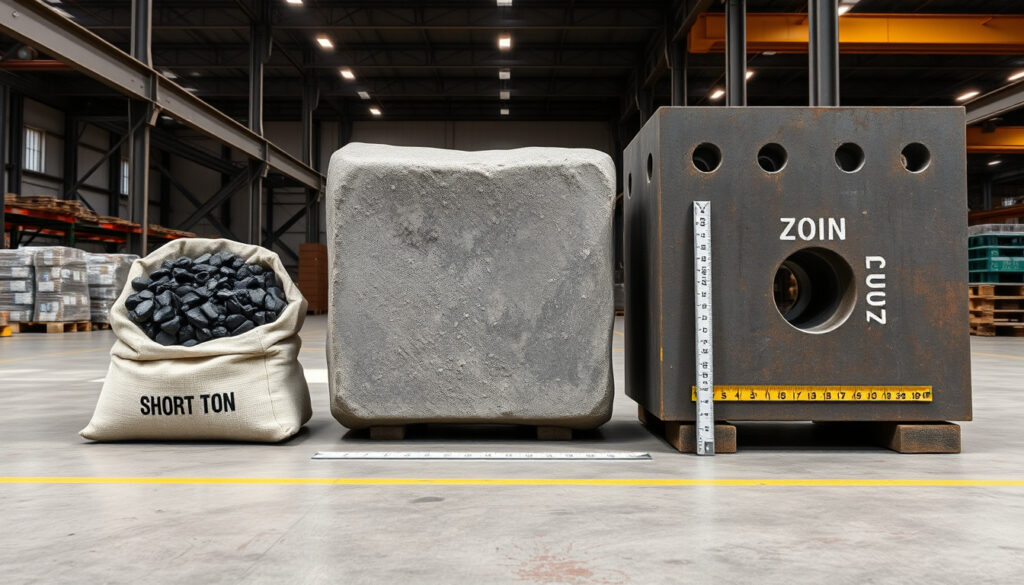
How Much Is a Ton? Short Ton, Long Ton, Metric Ton Explained
Ask someone how much a ton weighs, and you might get three different answers. In the US, a short ton equals exactly 2,000 pounds, according to the National Institute of Standards and Technology (NIST, U.S. measurement authority).
Short ton (US): 2,000 lb / 907 kg ·
Long ton (UK): 2,240 lb / 1,016 kg ·
Metric ton (tonne): 1,000 kg / 2,204.6 lb ·
1 short ton to metric ton: 0.907 t
Quick snapshot
- Short ton = 2,000 lb exactly (NIST)
- Long ton = 2,240 lb exactly (Britannica)
- Metric ton = 1,000 kg exactly (BIPM)
- UK officially uses metric but long ton persists in shipping (Britannica)
- Exact origin of the word “ton” is debated among etymologists
- Whether some UK industries (scrap metal, shipping) still use long ton exclusively is not fully documented
- 14th century – “ton” derived from “tun”, a wine cask (UK legislation)
- 1824 – UK Weights and Measures Act defines the long ton (UK legislation)
- 1866 – US adopts short ton for commerce (NIST)
- 1960 – SI establishes the metric ton (tonne) (BIPM)
- Before converting, identify which ton system applies
- International trade: use metric tons (tonnes)
- US domestic: use short tons
- UK shipping: verify long ton still used
Here’s how the three definitions stack up in exact numbers.
| Measurement | Value | Source |
|---|---|---|
| Short ton | 2,000 lb / 907 kg | NIST (U.S. measurement authority) |
| Long ton | 2,240 lb / 1,016 kg | Encyclopaedia Britannica (reference work) |
| Metric ton (tonne) | 1,000 kg / 2,204.6 lb | BIPM (international metrology body) |
| Short ton → metric ton | 0.907 t | NIST |
| Long ton → metric ton | 1.016 t | Britannica |
| Metric ton → short ton | 1.102 sh tn | BIPM |
| Metric ton → long ton | 0.984 long tn | Britannica |
How much is a ton of weight?
Definitions of the three common tons
- Short ton (US): exactly 2,000 avoirdupois pounds (NIST)
- Long ton (UK/imperial): exactly 2,240 pounds (Britannica)
- Metric ton (tonne): exactly 1,000 kilograms (BIPM)
These three definitions represent distinct measurement systems. In the United States, “ton” almost always means the short ton unless otherwise specified. In most other countries, “tonne” (metric ton) is the standard. The long ton persists in niche areas like ship displacement and some Commonwealth industries.
Why the answer depends on context
- If you’re buying gravel from a US quarry, the price is per short ton.
- If you’re importing steel from Europe, weights are in metric tonnes.
- If you’re reading about the Titanic’s displacement, the tonnage is in long tons.
The same word can mean three different weights. A short ton is 12 percent lighter than a long ton, as Britannica notes. The metric ton sits between them — heavier than a short ton but lighter than a long ton.
Using the wrong ton can cost you. A 240-pound difference per ton adds up fast in bulk shipping. A 20-ton container misclassified as short tons instead of metric tonnes would be 2,000 pounds lighter than expected.
The pattern: Context is everything. Always confirm which ton system your counterpart uses before quoting or ordering.
Is 1 ton exactly 2000 pounds?
The short ton definition
- In the US, a short ton equals exactly 2,000 lb (NIST).
- It is sometimes called a “net ton” in freight contexts.
- This definition has been official since 1866.
So yes, 1 ton (short ton) is exactly 2,000 pounds. But that’s only one flavor. If someone from the UK says “ton,” they might mean 2,240 lb, and if they use the metric system, they mean 1,000 kg (2,204.6 lb).
Common misconceptions about 1000 lbs and 100 kg
- 1 short ton is not 1,000 lb — that would be half a short ton.
- 100 kg is not a ton — a short ton is 907 kg, a long ton is 1,016 kg, a metric ton is 1,000 kg.
- A metric ton is 2,204.6 lb, so it’s heavier than a short ton by 204.6 lb.
Many people mistakenly think “ton” equals 1,000 kg because of the metric prefix “kilo.” But the short ton is 907 kg — 93 kg less.
The catch: The 2,000 lb answer is correct only for the US short ton. Internationally, it’s often wrong.
Why is a ton 2240 lbs?
Origins of the long ton
- The long ton (2,240 lb) comes from 20 long hundredweights of 112 lb each.
- The British Weights and Measures Act of 1824 codified the long ton (UK legislation).
- Historically, a tun of wine weighed about 2,240 lb, giving the word “ton” its meaning.
The extra 240 pounds over a short ton reflects medieval English trade practices. A “hundredweight” in England was 112 lb (8 stone of 14 lb), so 20 of those made 2,240 lb.
Current use in the UK and Commonwealth
- Since 1995, the UK officially uses the metric system for most trade.
- However, the long ton survives in shipping (deadweight tonnage) and some industrial contexts.
- Ship displacement is still measured in long tons in many naval documents.
So while you won’t buy groceries in long tons, you might encounter them in maritime and engineering specifications.
Why this matters: If you’re dealing with UK shipbuilders or scrap metal traders, clarify whether they mean long tons or metric tonnes. A 1.6% difference can lead to expensive misunderstandings.
Is 1000 kg equal to 1 ton?
The metric ton (tonne)
- Yes, 1,000 kg equals 1 metric ton (tonne).
- The BIPM recognizes the tonne as a non-SI unit accepted for use with SI (BIPM).
- It is abbreviated as “t” and used globally in science, industry, and trade.
The metric ton is the standard in nearly every country except the US. When you see “ton” in a European or Asian context, it’s probably a tonne.
Comparing tonne to short and long tons
- 1 metric ton = 1.102 short tons (NIST)
- 1 metric ton = 0.984 long tons (Britannica)
- 1 short ton = 0.907 metric tons
- 1 long ton = 1.016 metric tons
A metric ton is about 10% heavier than a short ton and about 1.6% lighter than a long ton.
If you buy steel from Europe quoting in metric tonnes but your supplier uses short tons, you’ll receive about 10% less material than expected. Always specify the ton type in contracts.
The implication: For international trade, the metric ton is the safest bet. But verify with your counterpart to avoid ambiguity.
What does 1 ton look like?
Visual comparisons for short ton (2,000 lb)
- A Honda Civic weighs roughly 1 short ton.
- One cubic yard of gravel weighs about 1.3 short tons.
- A grand piano can weigh 0.5 to 0.7 short tons.
These everyday objects help visualize the short ton. For a metric ton, imagine a polar bear — adult males can reach 1,000 kg (Britannica).
Visual comparisons for metric ton (1,000 kg)
- A small car (like a Smart Fortwo) weighs about 1 metric ton.
- An adult polar bear can weigh up to 1 metric ton.
- One cubic meter of water weighs exactly 1 metric ton.
Understanding scale helps prevent mistakes. If you’re told a shipment weighs “10 tons,” knowing the context could mean you’re expecting 20,000 lb (short), 22,400 lb (long), or 22,046 lb (metric).
The trade-off: Visual estimates are useful but never substitute for exact specifications in contracts.
Three tons, one word. Here’s how they compare side by side.
| Type | Pounds | Kilograms | Common use |
|---|---|---|---|
| Short ton | 2,000 | 907 | US domestic, freight |
| Long ton | 2,240 | 1,016 | UK shipping, displacement |
| Metric ton (tonne) | 2,204.6 | 1,000 | International trade, science |
The catch: Without the context, the same word can mean a 240-pound difference. Always confirm the system before you commit to a number.
Expert perspectives
“The long ton, which is 2,240 pounds (1,016.0 kilograms); the tonne, also called the metric ton, which is 1,000 kilograms (about 2,204.6 pounds) or 1 megagram.”
“There are 2000 pounds in a ton. 1 ton = 2000 pounds.” (referring to short ton)
“Short ton = 2000 lb exactly.”
— NIST, SI Units: Mass (U.S. measurement authority)
Confirmed facts and what remains unclear
Confirmed facts
- Short ton = 2,000 lb exactly (NIST)
- Long ton = 2,240 lb exactly (Britannica)
- Metric ton = 1,000 kg exactly (BIPM)
- UK officially uses metric but long ton remains in shipping (Britannica)
What’s unclear
- The exact origin of the word “ton” is debated among etymologists
- Whether some UK industries (scrap metal, shipping) still use long ton exclusively is not fully documented
- The precise year the short ton was first used officially in the US is sometimes disputed (often cited as 1866, but earlier usage existed)
- How many industries worldwide still rely on long tons versus metric tonnes varies by region
For business owners shipping goods internationally, the choice is clear: always specify whether you’re using short, long, or metric tons to avoid costly errors. A simple clarification in contracts can save thousands of dollars in mis-shipments and customs penalties.
alqasralmuneer.com, unitconverters.net, it.scribd.com, facebook.com, youtube.com, youtube.com, en.wikipedia.org
För den som snabbt vill räkna om vikter kan en omvandlingstabell för ton till kg vara till stor hjälp i vardagen.
Frequently asked questions
How many tons are in a pound?
One pound is 0.0005 short tons, 0.000446 long tons, or 0.0004536 metric tons. The conversion depends on which ton you’re using.
What is a displacement ton?
A displacement ton is a long ton (2,240 lb) used to measure the weight of water displaced by a ship. It’s standard in naval architecture.
How much does a cubic yard of gravel weigh in tons?
A cubic yard of gravel weighs about 1.3 short tons (2,600 lb) or 1.18 metric tonnes. This varies by moisture and stone type.
Why is a metric ton called a tonne?
To distinguish it from the short and long tons, the metric system uses “tonne” (from French) to mean exactly 1,000 kg. The abbreviation is “t”.
How many kilograms are in a long ton?
A long ton equals 1,016.04691 kg (Britannica).
What is the difference between a freight ton and a metric ton?
A freight ton (or measurement ton) is a volume-based unit (40 cubic feet) used in shipping. A metric ton is a mass unit (1,000 kg). They are not interchangeable.
Is a ton the same as a tonne in shipping?
No. In shipping, “ton” often means a long ton (2,240 lb) or a freight ton (volume). “Tonne” always means 1,000 kg. Clarify which your contract uses.
Related reading
More related posts
 Hand Foot and Mouth Disease Symptoms: Progression & Timeline
 Tini Mac and Cheese Recipe: Viral TikTok Layers of Cheese
 How to Open a Roth IRA – 2025 Eligibility and Steps Guide
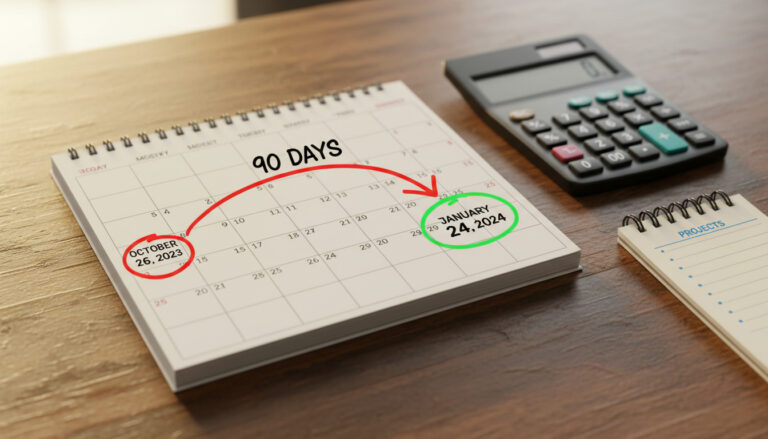 What Is 90 Days From Today – Free Calculator and Exact Date
 Did LeBron James Retire? 2026 Update on His NBA Future
 H&R Block 2025 Review: Services, Controversy, and Cost
 How to Reduce Monthly Expenses: Proven Methods and Budgeting Tips
 Blue Jays vs Orioles: Predictions, Stats & Head-to-Head History