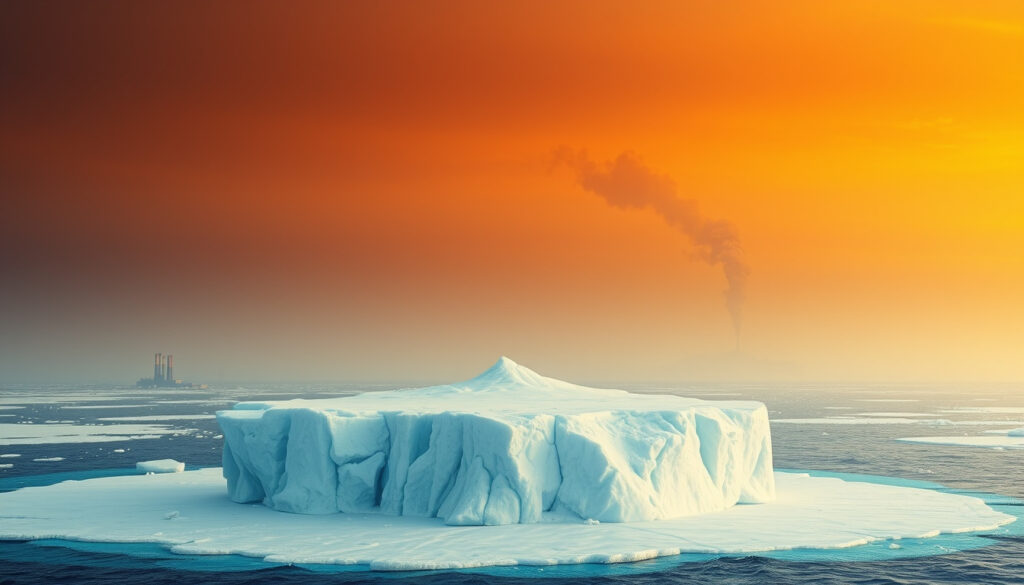
What Is Global Warming – Definition, Causes, Effects
Global warming represents one of the most pressing challenges facing humanity today. The term describes a gradual increase in Earth’s average temperature near the surface, a phenomenon driven primarily by greenhouse gases trapping heat in the atmosphere. Understanding how scientific phenomena work and what global warming is, what causes it, and what effects it produces has become essential knowledge for navigating the modern world.
The last decade, spanning from 2015 to 2024, stands as the warmest on record since modern temperature tracking began. This sustained warming has far-reaching implications for ecosystems, weather patterns, and human societies worldwide. While the planet has experienced natural climate fluctuations throughout its history, the current rate and magnitude of warming far exceeds historical norms.
This article examines the science behind global warming, its causes and effects, and how it differs from broader climate change. The goal is to provide a clear, factual foundation for understanding a phenomenon that shapes daily life in countless ways.
What Is Global Warming?
Global warming refers specifically to the long-term increase in Earth’s average surface temperature. This warming occurs when greenhouse gases—such as carbon dioxide, methane, and nitrous oxide—absorb sunlight and solar radiation that bounce off Earth’s surface, preventing heat from escaping into space. The result is a gradual accumulation of warmth that disrupts established climate patterns.
Scientists have tracked this phenomenon for over a century, with records showing a consistent upward trend in global temperatures. The Intergovernmental Panel on Climate Change reported that global temperature increased by 0.9 degrees Celsius between 1880 and 2012, or 1.1 degrees Celsius compared to pre-industrial mean temperature. This seemingly small number represents a significant shift when applied to the entire planet.
Global Warming Definition for Students
For students encountering this topic, global warming can be understood as the planet running a fever. Just as a fever indicates illness in the human body, global warming signals that Earth’s systems are experiencing stress from an excess of trapped heat. The Natural Resources Defense Council describes it as the most pressing environmental challenge of our time.
Classroom materials from NASA’s educational resources emphasize that this warming stems largely from human activities, particularly the burning of fossil fuels that release carbon dioxide into the atmosphere.
Short Answer: What Is Global Warming?
In concise terms, global warming is the gradual increase in Earth’s average temperature caused primarily by human activities that release greenhouse gases. These gases form a blanket around the planet, trapping heat that would otherwise dissipate into space. The consequences extend far beyond simple temperature increases, affecting weather systems, ocean currents, and ecological balance worldwide.
The last decade (2015-2024) represents the warmest period in recorded history, with each successive year frequently breaking previous temperature records.
| Fact | Detail | Source |
|---|---|---|
| Temperature Rise | 1.1°C since pre-industrial era | NASA, IPCC |
| Main Greenhouse Gas | CO2 from fossil fuel combustion | UN, NRDC |
| Emissions Share | Fossil fuels account for ~68% of global emissions | United Nations |
| Sea Level Rise | Approximately 20cm rise attributed to warming | Climate records |
| Scientist Consensus | 97-99% agree on human causation | NASA, C2ES |
| Wealthy Nation Responsibility | 20 largest economies cause ~80% of emissions | United Nations |
What Causes Global Warming?
The current era of global warming is directly attributable to human activity. While natural cycles have influenced Earth’s climate for hundreds of thousands of years, scientific evidence overwhelmingly points to human sources as the primary driver of recent warming. The EPA’s climate change science division confirms this assessment based on extensive research and observation.
Human-Made Causes
Several interconnected human activities drive global warming through greenhouse gas emissions:
- Burning fossil fuels: Coal, oil, and gas combustion represents the largest contributor to climate change, accounting for approximately 68 percent of global greenhouse gas emissions and nearly 90 percent of all carbon dioxide emissions. In the United States alone, transportation contributes 29 percent of emissions, electricity production 28 percent, and industrial activity 22 percent.
- Deforestation: Clearing forests releases stored carbon while simultaneously eliminating trees that would naturally absorb carbon dioxide. Deforestation, combined with agricultural expansion and other land use changes, accounts for roughly one-third of global greenhouse gas emissions.
- Industrial development and consumption: Factory emissions, refrigeration systems using CFCs, and the production of consumer goods all contribute significant quantities of greenhouse gases to the atmosphere.
The wealthiest economies bear the greatest responsibility for emissions. The 20 largest economies together produce approximately 80 percent of global greenhouse gas emissions, illustrating the concentrated nature of climate impact.
Natural Causes
Natural factors have historically influenced Earth’s climate, including volcanic eruptions, variations in solar energy output, and changes in Earth’s orbital patterns. These factors have driven climate fluctuations throughout the planet’s history. However, scientific consensus holds that recent warming cannot be explained by natural causes alone. The rate and pattern of current warming aligns closely with human industrial activity rather than natural cycles.
Most scientists agree that recent global warming is primarily caused by human activities, based on extensive evidence showing that most warming since the mid-1900s results from burning coal, oil, and gas.
What Are the Effects of Global Warming?
The consequences of global warming manifest across multiple dimensions of the natural world and human society. These effects compound over time, creating cascading impacts that touch virtually every aspect of life on Earth. According to the United Nations climate change resources, warming affects everything from daily weather to long-term ecological balance. Exploring the interconnected nature of environmental systems helps illustrate how these cascading effects unfold across different regions.
Temperature Increases
Global surface temperatures continue rising, with nearly all land areas experiencing more frequent hot days and prolonged heat waves. The Arctic has warmed at least twice as fast as the global average, creating dramatic changes in polar ecosystems. These temperature increases translate into tangible human impacts: heat-related illnesses become more common, outdoor work becomes more dangerous, and wildfire seasons grow longer and more severe.
Climate Disruption
Warmer temperatures fundamentally alter weather patterns and disrupt the delicate balance that sustains ecosystems worldwide. Precipitation patterns shift, creating both extended droughts in some regions and increased flooding in others. Water availability changes dramatically, making resources scarcer precisely where populations already face water stress. NOAA climate monitoring documents these shifts with increasing precision.
Broader Environmental Impacts
The effects extend to ocean systems, where warming waters expand (thermal expansion) and contribute to rising sea levels. Ecosystem disruptions affect biodiversity, forcing species to migrate, adapt, or face extinction. Agricultural zones shift, challenging food production systems built around stable climate conditions. These changes create ripple effects throughout natural and human systems.
Is Global Warming the Same as Climate Change?
While the terms “global warming” and “climate change” often appear interchangeably in casual discussion, they describe distinct but related phenomena. Understanding this distinction clarifies both the specific mechanisms of warming and the broader implications for weather and environment.
Key Differences Explained
Global warming refers specifically to the long-term increase in Earth’s average temperature. It describes the measurement of heat buildup in the climate system. Climate change, by contrast, encompasses any long-term shift in climate patterns, including temperature changes, alterations in precipitation, shifting weather patterns, and changes in extreme weather events. All global warming contributes to climate change, but climate change also includes factors unrelated to temperature increase.
The NASA climate evidence division notes that while global warming measures temperature rise, climate change describes the broader consequences of that warming—including more frequent storms, changing rainfall patterns, and shifting ecological zones.
Global warming represents the temperature increase itself, while climate change describes the resulting alterations to weather patterns, ecosystems, and environmental systems that follow from that warming. To understand global warming and its effects, explore $peptic ulcer disease symptoms.
A Timeline of Rising Temperatures
Understanding global warming requires examining how temperatures have changed over time. Modern temperature records reveal a clear pattern of accelerating warmth:
- 1880: Modern instrumental temperature records begin, providing reliable baseline measurements for comparison.
- Mid-20th century: Rate of warming increases noticeably, corresponding with accelerating industrialization globally.
- 1980s-1990s: Scientific community formally establishes consensus on human-caused warming through organizations like the IPCC.
- 2015-2024: The warmest decade on record, with each year frequently setting new temperature records.
- Projections: Climate models suggest potential increases of 2-4°C by 2100 without significant emission reductions.
This timeline demonstrates that warming is not merely hypothetical but is already documented through systematic measurement. IPCC assessment reports synthesize this evidence into comprehensive climate projections.
What We Know and What Remains Uncertain
Scientific understanding of global warming includes both well-established findings and areas where research continues to refine our knowledge. Recognizing this distinction helps contextualize climate science while acknowledging genuine uncertainty.
| Established Understanding | Areas of Ongoing Research |
|---|---|
| Human activities cause most recent warming | Exact magnitude of specific feedback mechanisms |
| Temperatures have risen approximately 1.1°C since pre-industrial times | Precise regional climate projections |
| CO2 levels are higher than any point in 800,000 years | Timing of specific tipping points |
| Scientist consensus exceeds 97% on human causation | Rate of ice sheet collapse under various scenarios |
| Greenhouse gases trap heat through confirmed physics | Exact cloud feedback effects |
The Context of Global Warming
Understanding global warming requires recognizing both the historical context of Earth’s climate and the unprecedented nature of current changes. The planet has experienced natural warming and cooling cycles throughout its 4.5-billion-year history, with ice ages and warm periods recurring over tens of thousands of years.
What distinguishes current global warming is the rapid rate of change—occurring over mere decades rather than millennia—and its clear correlation with human industrial activity. Carbon dioxide concentrations, currently exceeding 400 parts per million, surpass anything measured in ice core records spanning 800,000 years. This combination of speed and magnitude creates challenges for both natural systems and human infrastructure designed for stable climate conditions.
The greenhouse effect itself is a natural phenomenon that makes Earth habitable; without it, average temperatures would be approximately 33°C colder. The problem arises when human activities enhance this natural process beyond historical boundaries, creating conditions outside the range in which human civilization developed.
Expert Perspectives and Sources
“Most of the warming since the mid-1900s is due to human activities, primarily the burning of fossil fuels.”
— NASA Climate and Climate Change Educational Resources
“Fossil fuels—coal, oil, and gas—are the largest contributor to climate change, accounting for around 68 percent of global greenhouse gas emissions.”
— United Nations Climate Change Science
These statements reflect the overwhelming scientific consensus documented across multiple independent research institutions, government agencies, and international bodies. The Center for Climate and Energy Solutions provides accessible resources explaining these scientific foundations.
Summary
Global warming represents the gradual increase in Earth’s average temperature caused primarily by human activities that release greenhouse gases into the atmosphere. This phenomenon differs from the broader concept of climate change, which encompasses all long-term shifts in climate patterns. The causes include burning fossil fuels, deforestation, and industrial activities that together account for the overwhelming majority of recent warming. Effects range from rising temperatures and sea levels to disrupted weather patterns and ecosystem changes. Scientific consensus overwhelmingly supports human causation, though research continues to refine understanding of specific impacts and projections. Understanding complex scientific phenomena requires distinguishing between established facts and areas of ongoing research, a distinction that applies equally to global warming.
Frequently Asked Questions
What is global warming in simple terms?
Global warming is the gradual increase in Earth’s average temperature caused by greenhouse gases trapping heat in the atmosphere, primarily from human activities like burning fossil fuels.
What causes global warming?
Human activities cause most global warming, particularly burning fossil fuels for energy, deforestation that releases stored carbon, and industrial processes that emit greenhouse gases.
How is global warming different from climate change?
Global warming specifically describes temperature increase, while climate change encompasses all resulting changes including altered weather patterns, precipitation shifts, and increased extreme events.
What are the main effects of global warming?
Effects include rising temperatures, sea level rise, more frequent heat waves and extreme weather, ecosystem disruption, and changes in water availability across different regions.
Is global warming caused by humans?
Scientific consensus holds that human activities are the primary cause of recent global warming, with over 97 percent of climate scientists agreeing on this assessment.
How much has Earth warmed since pre-industrial times?
Earth’s average temperature has risen approximately 1.1 degrees Celsius compared to pre-industrial levels, according to IPCC and NASA measurements.
What are the biggest contributors to greenhouse gas emissions?
Fossil fuel combustion accounts for about 68 percent of global greenhouse gas emissions, with transportation, electricity production, and industry being the largest sources.
More related posts
 How Did Kurt Cobain Die? Facts, Timeline & Report
 US Life Expectancy 2024: Data, Trends, Comparisons
 Eddington (Film) Showtimes: Plot, Cast & Reviews
 Best Free NFL Mock Draft Simulator 2027: Compare Top Tools
 Cloudy With A Chance Of Meatballs Cast – Full Voice Actors List
 FIFA U-17 World Cup Standings 2026: Groups, Schedule & Results
 GS Pay Scale 2025 – Complete Guide to Raises and Tables
 Signs of Low Blood Sugar: Symptoms, Causes & Treatment