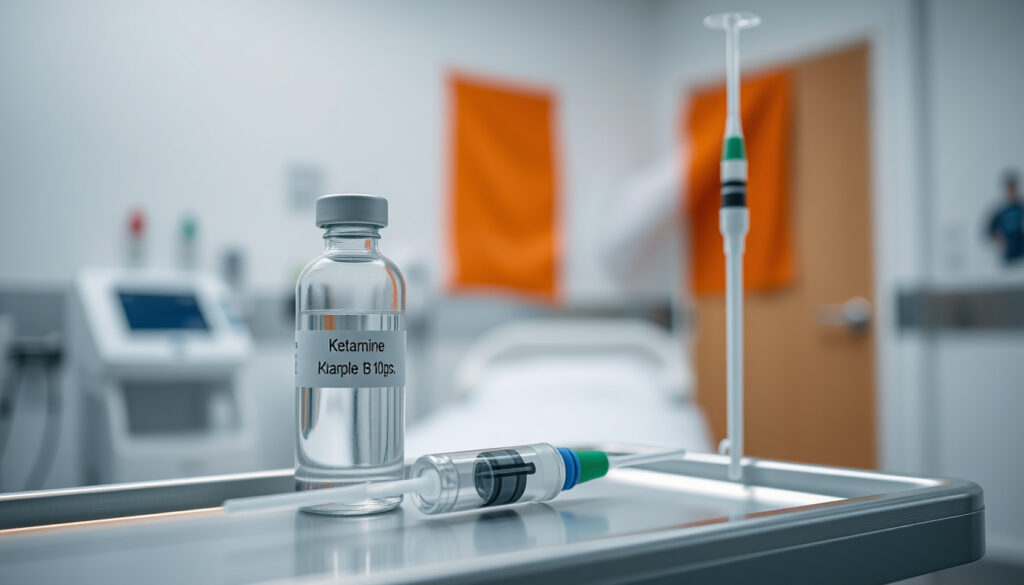
What Is Ketamine Therapy? Uses, Risks & Ireland Info
When standard antidepressants leave you exactly where you started—stuck, exhausted, running out of options—that’s where ketamine therapy often steps in. Originally a surgical anesthetic from the 1960s, ketamine has carved out a surprising new role in treating depression and chronic pain that resist conventional approaches. In Ireland, where treatment-resistant depression affects a significant portion of those seeking mental health care, ketamine’s rapid action within one hour of infusion has drawn serious attention from clinicians and patients alike. Here’s what the science says, what Irish clinics are actually offering, and what you should know before considering it.
Primary Uses: Depression, chronic pain · Administration Method: Low-dose IV infusions · Mechanism: Acts on glutamate system · Key Sources: St Patrick’s Mental Health Services, Irish Medical Journal
Quick snapshot
- Ketamine treats chronic pain and depression for more than 10 years (The Pain Team)
- Rapid antidepressant effect within one hour of infusion (St Patrick’s Mental Health Services)
- Ireland classifies ketamine as Schedule 3 controlled drug (Irish Medical Journal)
- Optimal long-term maintenance dosing protocols
- Efficacy for couples therapy applications
- Long-term follow-up data beyond initial response
- First used as surgical anesthetic in 1960s
- Clinical trials for depression began in Ireland around 2020–2021
- 2025 Trinity College Dublin trial reports on hospitalised patients
- Ketamine therapy expansion across Ireland through multiple providers
- Northern Ireland first ketamine-assisted psychotherapy programme operational
- Neuromed Clinic combining ketamine with TMS for enhanced outcomes
| Attribute | Detail |
|---|---|
| Originated As | Anesthetic |
| Dose Type | Low, sub-anesthetic |
| Delivery | IV drip |
| Targets | Depression, pain |
| Effect Onset | Within 1 hour |
| Effect Duration | Disappears within days (single infusion) |
| Ireland Status | Schedule 3 controlled drug |
Reasons for ketamine therapy
Ketamine therapy exists for one straightforward reason: standard treatments fail too many people. Treatment-resistant depression—the clinical term for depression that doesn’t respond to at least two different antidepressant medications—affects a substantial portion of those seeking help. When psychotherapy and conventional drugs leave symptoms largely intact, clinicians look elsewhere. Ketamine works differently from every other approved antidepressant on the market, targeting the glutamate system rather than serotonin or norepinephrine pathways. That mechanistic difference is precisely why it succeeds where others plateau. According to St Patrick’s Mental Health Services (Ireland’s leading mental health research institution), ketamine’s rapid antidepressant effect represents a significant advantage compared to current treatments that may take weeks to produce noticeable change.
Depression treatment
For major depressive disorder that has proven resistant to other interventions, ketamine offers something rare in psychiatry: relief within hours rather than weeks. Research from St Patrick’s Mental Health Services confirms that symptoms can improve within one hour of a single infusion. This matters enormously for patients in crisis or those who have cycled through multiple medications without improvement. The Mirabilis Health programme (Northern Ireland’s first ketamine-assisted psychotherapy provider) describes this as a structured, medically supervised pathway specifically designed for treatment-resistant cases. However, Trinity College Dublin’s 2025 clinical trial reported no benefit for hospitalised depression patients—highlighting that not every population responds, and that context matters enormously.
Chronic pain management
Beyond mood disorders, ketamine infusion therapy addresses chronic pain conditions that prove difficult to manage through standard protocols. Peer-reviewed research in the National Center for Biotechnology Information database documents a daily 4-hour low-dose ketamine infusion for ten days significantly reducing overall pain, burning pain, and pain to light touch. Psychology Today Ireland reports that low-dose ketamine infusions can be safe and effective for patients with chronic pain, offering an alternative when opioids and other analgesics prove insufficient or carry unacceptable side-effect profiles.
Other mental health uses
Ketamine therapy addresses depression, anxiety, and PTSD as primary mental health indications, according to Inish Live reporting on Irish provider expansion plans. Neuromed Clinic Ireland is positioning itself to offer ketamine therapy combined with TMS (Transcranial Magnetic Stimulation) for rapid relief from all three conditions—a multimodal approach that may enhance outcomes compared to ketamine alone.
The implication: when conventional treatments consistently fail a substantial patient population, clinicians face both a clinical imperative and an ethical obligation to pursue alternative mechanisms that evidence supports.
Does ketamine therapy get you high?
The short answer is: at therapeutic doses under medical supervision, the psychoactive effects are minimal for most people. But the question deserves a fuller examination because ketamine’s reputation as a recreational dissociative anaesthetic complicates public understanding of its legitimate medical use. At the doses used for depression and pain treatment—substantially lower than anesthetic or recreational doses—patients typically experience relaxation and altered perception rather than the intense “K-hole” dissociative state associated with abuse. Mirabilis Health emphasizes that medical supervision is a critical component of ketamine-assisted psychotherapy programmes, monitoring patients throughout and adjusting doses accordingly.
Effects at therapeutic doses
Low-dose ketamine infusions are designed to produce therapeutic benefit without significant psychoactive disruption. Patients may notice mild changes in sensory perception, a sense of floating or relaxation, and occasionally brief dissociative experiences—but these effects are typically manageable and fade within the session duration. Neuromed Clinic Ireland structures its protocols around medically supervised administration where trained staff can intervene if effects become uncomfortable.
Dissociative experiences
Some patients do experience dissociative effects during infusion—described variously as feeling detached from one’s body, sensing time differently, or experiencing mild visual distortions. These effects are usually dose-dependent and short-lived. The Pain Team notes that at the sub-anesthetic doses used for therapy, most patients remain conscious and responsive while benefiting from the treatment’s neurological effects. Importantly, the dissociative experience itself may contribute to therapeutic benefit in some protocols, particularly ketamine-assisted psychotherapy approaches that use the altered state as a therapeutic window.
Comparison to recreational use
The doses used medically are typically 0.5 mg/kg or lower, administered slowly via IV drip. Recreational use often involves much higher doses administered differently (snorting, injecting). The Irish Medical Journal notes that Ireland has categorized ketamine as a Schedule 3 controlled drug precisely because of its questionable safety profile and potential to induce dependence—acknowledging both its medical utility and its abuse potential. This regulatory framework reflects the drug’s dual nature: legitimate medicine at controlled doses, dangerous substance at recreational ones.
What this means: clinicians who administer ketamine medically are not merely providing a drug—they are actively managing a spectrum of effects that, left unsupervised, could tip toward harm.
Who is not a good candidate for ketamine therapy?
Ketamine therapy isn’t suitable for everyone, and screening exists precisely because the treatment carries genuine risks for specific populations. The Irish Medical Journal documents ketamine’s questionable safety profile and dependence potential—concerns that make certain patients poor fits. Before pursuing ketamine treatment, clinicians evaluate several factors that would disqualify or require caution for candidates.
Contraindications
Absolute contraindications include uncontrolled hypertension, as ketamine can elevate blood pressure during infusion—creating risk for patients with cardiovascular instability. Active psychotic disorders represent another hard contraindication: ketamine’s dissociative properties can exacerbate psychotic symptoms rather than relieve them. According to Mirabilis Health’s programme guidelines, patients with a history of psychosis require thorough psychiatric evaluation before consideration, as the NMDA receptor activity underlying ketamine’s antidepressant effect may interact unpredictably with psychotic illness.
Medical history risks
Substance use disorders present a complex contraindication. Because ketamine carries abuse potential—Ireland’s Schedule 3 classification reflects this—patients with current or recent substance use issues may be excluded or require additional safeguards. A history of ketamine use specifically warrants careful review. Cardiac conditions, liver disease, and pregnancy also factor into candidacy decisions, as safety data in these populations remains limited. Neuromed Clinic Ireland conducts comprehensive medical evaluation as part of its intake protocol, ensuring patients understand both benefits and risks before proceeding.
Psychiatric exclusions
Beyond psychosis, certain personality disorders and severe dissociative disorders may complicate ketamine therapy outcomes. Patients with active suicidality require careful monitoring regardless of treatment modality—ketamine’s rapid action can sometimes intensify emotional reactivity before stabilization occurs. St Patrick’s Mental Health Services notes that its ongoing trials apply strict inclusion criteria to ensure patient safety while building evidence about which populations benefit most.
What this means: providers who skip proper screening place patients at measurable risk—Irish clinicians who follow Schedule 3 protocols are fulfilling a regulatory and ethical obligation, not merely checking boxes.
Is ketamine therapy dangerous?
The honest answer is: it depends on context. Low-dose ketamine under medical supervision carries a different risk profile than unsupervised high-dose use—much like any pharmaceutical compound. Psychology Today Ireland reports that low-dose ketamine infusions can be safe and effective for patients with chronic pain when administered appropriately. But “safe” in clinical terms doesn’t mean “risk-free,” and understanding those risks matters for anyone considering treatment.
Short-term side effects
During and immediately after infusion, patients may experience nausea, elevated blood pressure, mild dissociation, dizziness, and headache. These effects typically resolve within hours. The peer-reviewed study in NCBI documenting the ten-day infusion protocol noted these side effects were generally manageable and that no patients discontinued due to adverse events during the controlled trial setting. In a clinical environment with proper monitoring, acute side effects can be addressed immediately—reducing risk substantially compared to unsupervised use.
Long-term risks
The dependence potential is real and documented. The Irish Medical Journal explicitly cites ketamine’s “potential to induce dependence” as the reason for its Schedule 3 classification. Regular, long-term use at high doses can produce bladder damage, cognitive effects, and psychological dependence. However, clinical protocols for depression typically involve limited treatment courses rather than open-ended maintenance—reducing cumulative exposure. Patient testimonials, including one YouTube testimonial reporting extended ketamine therapy use for two years, highlight that long-term arrangements are possible but require ongoing medical oversight to manage risk.
Safety in clinical settings
Clinical protocols include continuous monitoring during infusions, pre-treatment medical evaluation, and structured follow-up to catch emerging concerns. Mirabilis Health describes medical supervision as a critical component of its programme—not just for efficacy but for safety. Vital signs are tracked throughout infusion, staff are trained to handle acute reactions, and emergency protocols exist for rare adverse events. The contrast with recreational use—self-administered, unmonitored, often at unknown doses in unpredictable environments—is stark.
What this means: patients who enter treatment through qualified Irish providers receive monitoring and protocols that recreational users entirely lack—the clinical version of this drug is not the same substance as the street version.
How many ketamine treatments for depression?
There’s no universal answer—treatment protocols vary based on condition, severity, patient response, and provider approach. What research does suggest is that single infusions produce effects that fade within days, making repeated or extended protocols necessary for sustained benefit. The question isn’t just how many treatments, but how clinicians determine when to continue, adjust, or stop.
Initial series
Most protocols begin with an initial series—commonly two to six infusions over one to two weeks. St Patrick’s Mental Health Services describes the rapid onset (within one hour) but also notes that effects disappear within days for single infusions, per Trinity College Dublin’s clinical trial data. This pattern suggests that a loading series—multiple infusions in quick succession—may be necessary to build and maintain benefit. Patients typically assess response after the initial series, with clinicians making continued treatment decisions based on symptom improvement.
Maintenance dosing
After an initial series, patients may transition to maintenance dosing—periodic booster infusions to sustain benefit. The frequency varies widely: some patients receive boosters every few weeks, others monthly or less. Mirabilis Health’s structured programme describes a medically supervised pathway that includes ongoing assessment rather than indefinite treatment. The chronic pain research protocol used daily four-hour infusions for ten days—a more intensive approach than typical depression protocols, reflecting the different goals and contexts of pain management.
Response variability
Not everyone responds to ketamine, and not everyone who responds maintains that response indefinitely. Ketamin Plus notes that some patients experience significant improvement in mood and symptom reduction, but response rates and durability vary by individual. Trinity College Dublin’s 2025 findings specifically reported no benefit for hospitalised depression patients—suggesting that treatment setting and illness severity influence outcomes. Patients should enter treatment with realistic expectations: ketamine is a tool, not a guaranteed cure, and its benefits require ongoing assessment.
What this means: patients who commit to ketamine therapy in Ireland are committing to a process—not a one-time intervention—and providers who structure protocols around ongoing assessment are those worth choosing.
Upsides
- Rapid antidepressant effect within one hour
- Works when multiple antidepressants have failed
- Targets glutamate system—different mechanism from SSRIs
- Evidence-backed for chronic pain management
- Emerging combination with TMS may enhance outcomes
- Available in Ireland through multiple providers
Downsides
- Dependence potential—Schedule 3 controlled in Ireland
- Effects of single infusion disappear within days
- Not effective for all patients or conditions
- Requires medical supervision—cost and access barriers
- Short-term side effects (nausea, dissociation, elevated BP)
- Long-term safety data remains limited
Ketamine’s Schedule 3 classification in Ireland isn’t bureaucratic happenstance—it reflects genuine dependence risk. Patients with substance use histories face higher odds of dependency, and providers who skip proper screening are cutting corners that matter enormously for patient safety.
“Ketamine has a rapid antidepressant effect with symptoms improving within one hour of single infusion.”
— St Patrick’s Mental Health Services (Ireland’s leading mental health research institution)
“Due to ketamine’s questionable safety profile and potential to induce dependence, Ireland has categorized it as a Schedule 3 controlled drug.”
— Irish Medical Journal (Ireland’s peer-reviewed medical publication)
“Single infusions of ketamine have been reported to produce rapid antidepressant effects, but these disappear within days.”
— Trinity College Dublin (Ireland’s leading research university)
Northern Ireland has the first ketamine-assisted psychotherapy programme in Ireland through Mirabilis Health, while the Republic is still building its clinical infrastructure. For patients south of the border, access requires careful provider research and potentially travelling to Belfast.
For Irish patients with treatment-resistant depression or chronic pain, ketamine therapy represents a genuine option where others have failed—but it’s not a casual decision. The rapid onset within one hour offers hope for those in crisis, but the short-lived nature of single infusions means committing to a series and potentially ongoing maintenance. Ireland’s Schedule 3 classification exists for good reason: dependence risk is real and clinicians who skip proper screening are putting patients at unnecessary risk. As clinical infrastructure expands—with Neuromed Clinic Ireland combining ketamine with TMS and St Patrick’s conducting trials—Irish patients will have more options. But more options mean more responsibility to evaluate providers carefully, ask hard questions about protocols, and understand that the supervised clinical version of this drug is fundamentally different from the recreational one that made its reputation.
Related reading: intrusive thoughts in mental health
Ketamine therapy harnesses a dissociative anesthetic where ketamine is not an opioid, setting it apart from opioids while targeting depression and chronic pain effectively.
Frequently asked questions
What is ketamine therapy for couples?
Ketamine therapy for couples isn’t a standard clinical indication. While some providers market ketamine-assisted psychotherapy for relationship issues or attachment disorders, strong evidence for couples-specific applications remains limited. The primary evidence base covers treatment-resistant depression, anxiety, PTSD, and chronic pain. Couples considering ketamine therapy should seek providers who can clearly articulate their specific therapeutic model and evidence base.
What is the cost of ketamine therapy in Ireland?
Costs vary significantly by provider, protocol, and location. Doctify lists ketamine treatment providers in Dublin 16 with verified reviews, but prices typically aren’t displayed upfront. Initial consultation fees, per-infusion costs, and maintenance schedules add up quickly—patients should budget for multiple infusions in an initial series plus potential boosters. Insurance coverage in Ireland remains limited; check with your provider about payment plans or medical card eligibility.
What is ketamine infusion for pain in Ireland?
Ketamine infusion for pain uses low-dose IV ketamine to manage chronic pain conditions that respond poorly to standard analgesics. Research published in the National Center for Biotechnology Information documents protocols involving daily four-hour infusions for ten days that significantly reduced pain levels. In Ireland, pain specialists and specialized clinics offer this service, typically for conditions like complex regional pain syndrome, fibromyalgia, or neuropathic pain that hasn’t responded to other treatments.
How does ketamine therapy work?
Ketamine works primarily by blocking NMDA receptors in the brain—the same receptors involved in pain transmission and mood regulation. Unlike SSRIs and SNRIs that target serotonin or norepinephrine, ketamine affects the glutamate system—the brain’s primary excitatory neurotransmitter. This different mechanism is why ketamine succeeds where other antidepressants fail for treatment-resistant patients. The blockade triggers a cascade of neural changes that, within hours, can reduce depressive symptoms and pain perception.
What are side effects of ketamine therapy?
Short-term side effects include nausea, elevated blood pressure, headache, dizziness, and mild dissociative experiences during infusion. These typically resolve within hours of treatment. Long-term concerns include dependence potential (particularly relevant given Ireland’s Schedule 3 classification), bladder issues with heavy use, and cognitive effects with repeated high-dose exposure. Under proper medical supervision, acute side effects are manageable and monitored throughout treatment.
Is ketamine therapy effective for depression?
Yes, for many patients—particularly those with treatment-resistant depression who haven’t responded to multiple other treatments. St Patrick’s Mental Health Services confirms rapid antidepressant effects within one hour. However, Trinity College Dublin’s 2025 trial found no benefit for hospitalised patients—suggesting that severity and treatment context influence outcomes. Not every patient responds, and those who do may require ongoing maintenance treatment.
What conditions is ketamine therapy used for?
In Ireland, ketamine therapy is primarily used for treatment-resistant depression, chronic pain conditions, and increasingly for anxiety and PTSD. Inish Live reporting on provider expansion describes depression, anxiety, and PTSD as primary mental health indications. Chronic pain applications include neuropathic pain, fibromyalgia, and complex regional pain syndrome. Some providers offer combination therapy with TMS for enhanced outcomes.
More related posts
 The Gods Must Be Crazy: Why Banned, Where to Watch & More
 The Way Home Season 4: Premiere Date, Episodes & How to Watch
 How to Treat Swollen Lymph Nodes in Neck Naturally
 The Angel Next Door Spoils Me Rotten: Season 2 & Parents Guide
 Anime Final Strike Codes – Active List October 2024
 Emilie Kiser Trigg Drowning: Tragedy, Forgiveness, Legal Outcome
 Ben Robson Movies and TV Shows: Full List & Where to Watch