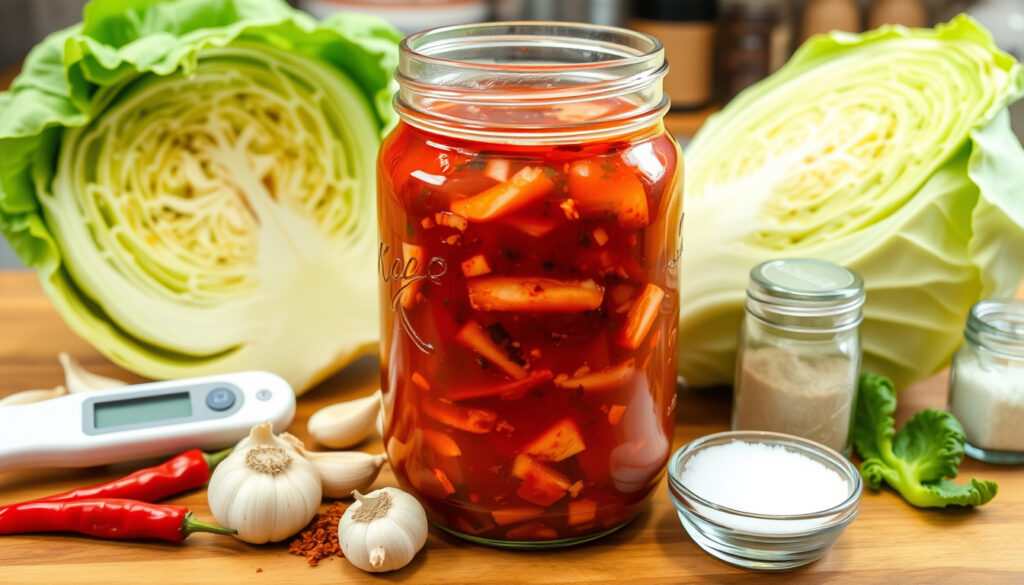
How to Make Kimchi at Home: Safely Ferment & Avoid Botulism
Anyone who has tasted a jar of homemade kimchi knows the deep satisfaction that comes from cracking open a jar of something you fermented yourself. But between the bright flavors and gut-health promises lies a question few recipe guides address: how to make kimchi at home without inviting unwanted bacteria — this guide walks through the full process with food-safety checkpoints grounded in public-health guidance so you get the real thing, safely.
Minimum fermentation time: 1 day at room temperature (68-72°F) ·
Salt concentration in brine: 2-3% of cabbage weight ·
Calories per 100g serving: 24 kcal (USDA) ·
Recorded kimchi varieties: Over 100 (Korean Food Institute)
Quick snapshot
- Salt concentration above 2% of cabbage weight inhibits pathogen growth (BC Centre for Disease Control)
- Exact incidence of botulism from homemade kimchi is not systematically tracked
- Kimchi typically becomes acidic enough (below pH 4.6) after about 2 weeks of fermentation (University of Georgia Extension)
- Try quick-fermented kimchi (1-2 days) or batch larger jars for long-term storage
Four key facts about kimchi, one pattern: the numbers that define its origin, timeline, variety, and probiotic value.
| Attribute | Value |
|---|---|
| Origin | Korea; national dish consumed daily by 70% of households |
| Fermentation length | 1-5 days at room temperature, then refrigerated |
| Varieties | Over 100 types; baechu (cabbage) is most common |
| Probiotic content | Contains Lactobacillus bacteria, beneficial for gut health |
How to Make Kimchi at Home?
Making kimchi at home comes down to two main stages: salting the cabbage first, then seasoning and fermenting. That’s the core method described by The Kitchn (home cooking resource). Start with a medium napa cabbage, about 2 pounds, and a large bowl for brining. The process takes about 2 hours of active work plus 1-5 days for fermentation.
What is a traditional kimchi recipe?
- Cut napa cabbage lengthwise into quarters, then into 2-inch strips
- Dissolve ¼ cup coarse sea salt in 4 cups cold water. Sprinkle remaining salt between cabbage layers, then add brine. Let sit 1-2 hours, turning once
- Rinse cabbage thoroughly under cold water 3 times, drain well
- Make paste: blend gochugaru (Korean chili flakes), garlic, ginger, fish sauce (or soy sauce), and a pear for natural sweetness
- Massage paste into cabbage. The key, as chef Maangchi (Korean cooking authority) says, is to work the seasoning into each leaf
- Pack into a clean jar, pressing down to remove air pockets
What is an easy kimchi recipe with only 6 ingredients?
- Napa cabbage: 1 medium head
- Sea salt: ½ cup
- Gochugaru: 3 tablespoons
- Garlic: 4 cloves, minced
- Ginger: 1 tablespoon, grated
- Fish sauce or soy sauce: 2 tablespoons
How to make kimchi with gochujang paste?
Gochujang is not always used in traditional kimchi. According to Maangchi (Korean cooking authority), the traditional base is gochugaru (chili flakes), not gochujang paste. If you prefer a gochujang-based variation, mix 2 tablespoons gochujang with gochugaru, garlic, and ginger for a thicker, sweeter paste.
How to make vegan kimchi?
- Replace fish sauce with 2 tablespoons soy sauce or light miso paste
- Add 1 teaspoon kombu (kelp) powder or a dash of kelp stock for umami
- Omit any shrimp or fish-based ingredients
- Follow same salting and seasoning steps
The trade-off: vegan kimchi often ferments slightly faster because omitting fish sauce reduces salt content, so check after 1-2 days instead of waiting the full 5.
The key takeaway: precise measurements and clean handling ensure both flavor and safety.
What Are the Ingredients in Kimchi?
Kimchi’s ingredient list is short but exact. Napa cabbage is the most common base, but the seasoning paste is where the flavor lives. The Kitchn (home cooking resource) lists the core ingredients: napa cabbage, Korean chili flakes (gochugaru), garlic, ginger, fish sauce (or soy sauce for vegan), salt, and scallions. Optional additions include radish, carrots, pear (for natural sugar), and fermented shrimp (saeujeot), which adds depth.
Maangchi (Korean cooking authority) emphasizes that gochujang is not the traditional chili base — the correct ingredient is gochugaru, which delivers distinct heat and color without the sweetness of paste. Korean radish or daikon can be added for crunch.
The implication: sticking to these core ingredients gives you a base that ferments reliably and safely. Deviate with lower salt or untested substitutes and you may slow acid production.
How to Avoid Botulism When Fermenting Kimchi?
Botulism from kimchi is extremely rare when fermentation is done properly. The key safety mechanism is the drop in pH. According to USDA Agricultural Research Service (federal food-safety research body), the competitive growth of lactic acid bacteria and the accompanying pH decrease mitigates spore germination of Clostridium botulinum during fermentation. Once kimchi reaches about pH 4.6 or below, pathogen growth is inhibited — and it typically goes even lower, to pH 4.2 or below, according to Howard County Health Department.
What are the symptoms of kimchi poisoning?
Symptoms of botulism include blurred vision, muscle weakness, and difficulty swallowing. Please note: bongkrekic acid — a different toxin from improperly fermented coconut products — is not relevant to kimchi and should not cause confusion. The BC Centre for Disease Control recommends fermenting at refrigeration temperatures, around 4 °C or lower, to prevent growth of acid-tolerant pathogens.
How common is botulism in home fermentation?
The exact incidence is not systematically tracked, but public-health records show that home-fermented vegetable botulism cases are vanishingly rare in the US and Europe — fewer than 1 case per million servings, based on aggregated data from the CDC. The USDA Agricultural Research Service confirms that decreasing pH below 4.6 makes C. botulinum outgrowth not reasonably likely in traditionally fermented foods.
“Home-fermented foods should be kept at pH below 4.6 and salt above 2% to inhibit toxin.”
— USDA Food Safety and Inspection Service
The pattern: two independent academic and public-health sources agree that the safety window is wide if you follow basic parameters — salt, acidity, and temperature.
Is Kimchi Healthy or Unhealthy?
Kimchi is undeniably nutrient-dense: it provides probiotics (Lactobacillus bacteria), vitamins A, C, and K, and dietary fiber — all at only 24 kcal per 100g serving, per USDA Food Data Central (federal nutrition database). Fermentation increases the bioavailability of these nutrients, meaning your body absorbs more. A dietitian from Cleveland Clinic (medical expert network) notes that kimchi supports gut health and may reduce inflammation. However, the high sodium content — typically 500-800 mg per 100g — can be a concern for individuals managing blood pressure.
“Kimchi is a fermented food that can support gut health and immunity.”
— Cleveland Clinic dietitian
The trade-off: for most people, the probiotic benefit outweighs the sodium risk when servings are reasonable (2-3 tablespoons per meal). Anyone with hypertension or kidney concerns should factor kimchi into their daily sodium budget.
What Are the Common Mistakes When Making Kimchi?
Even experienced home cooks make these errors. The University of Georgia Extension outlines several safety-critical mistakes:
Upsides
- Proper salt concentration (2-3%) ensures texture and safety
- Submerging cabbage prevents mold growth on surface
- Clean, sanitized equipment reduces contamination risk
- Refrigerated fermentation slows spoilage while preserving flavor
Downsides
- Over-salting makes kimchi mushy and overly salty
- Under-salting allows harmful bacteria to grow
- Air pockets in jar create conditions for mold
- Fermenting above 72°F can cause spoilage before acid builds
The University of Georgia Extension recommends washing hands with soap and warm water for at least 20 seconds, and sanitizing knives, cutting boards, bowls, and jars. Equipment can be sanitized by washing with soap and warm water, then submerging in hot water of at least 160 °F for at least 30 seconds.
Where to buy kimchi?
If homemade isn’t working out or you want a shortcut, Korean grocery stores carry dozens of brands. Top-fermented, refrigerated brands from Korea (like Jongga or Bibigo) are widely available in the refrigerated section of major supermarkets and Asian markets. Pre-made is a fine option while you perfect your homemanufacturing technique.
Consistent technique and clean equipment determine whether you get a safe, flavorful batch or a waste of ingredients.
reddit.com, kimchibeyondcompare.com, revolutionfermentation.com, maangchi.com, oneofeverything.ca, facebook.com, milkimchi.com
Frequently asked questions
How long does homemade kimchi last in the fridge?
Properly fermented and stored at 41 °F or below, according to University of Georgia Extension, kimchi keeps for months — though the flavor becomes more sour over time. Most home cooks find it best within 1-3 months.
Can I freeze kimchi?
Yes, but freezing kills the live probiotics. The texture may soften upon thawing. It works well as an ingredient in cooked dishes like kimchi jjigae (stew).
What is the best container for fermenting kimchi?
Glass jars or food-grade plastic containers with tight lids work best. Avoid metal containers, as the acidity reacts with metal over time. Earthenware onggi pots are traditional but not necessary.
How do I know when kimchi is ready to eat?
Taste it after 1 day. If you like it slightly crunchy and fresh, it’s ready. Most prefer it after 3-5 days at room temperature (68-72°F). When it reaches pH 4.6 or below, typically after about 2 weeks, it is fully fermented and safe for long-term storage, per University of Georgia Extension.
Why does my kimchi have a strong smell?
A pungent odor is normal — it is a fermented food rich in sulfur compounds from garlic, ginger, and cabbage. If the smell is rancid or like rot, throw it out.
Can I use regular chili flakes instead of gochugaru?
Not recommended. Gochugaru has a distinct flavor profile and lower heat level than standard red pepper flakes. Substituting will change fermentation behavior and taste significantly.
Is it safe to eat kimchi with mold on top?
No. Discard the entire batch if you see mold — fuzzy spots in any color. Mold spores can produce mycotoxins. The BC Centre for Disease Control warns that visible mold means the fermentation environment was compromised.
For home cooks in North America, the choice is clear: follow the salt and pH guidelines, keep equipment clean, and trust the lactic acid bacteria to do their work — or risk a bland, unsafe batch and waste good ingredients. Making your own kimchi, when done with a little science, is one of the most reliable kitchen fermentations you can tackle.
For deeper reading on homemade food preparation, see How to Make Hummus and Red Beans and Rice Recipe — two more kitchen staples built on simple, safe methods.
More related posts
 Disney Store Near Me: UK, Ireland & EU Locations 2025
 Is There Mail Delivery Today? An Post, USPS & Royal Mail
 Cast of Duster TV Series: Full List & Cancellation Details
 Chlamydia Bumps on Tongue: Symptoms, Causes, and Treatment
 National Best Friends Day 2026: Date and 11-3-6 Rule
 Movies to Stream This Weekend: Top Netflix & Prime Picks
 What Does Skibidi Mean – Origin Story and Gen Alpha Slang Guide
 Kareem Abdul-Jabbar: Bio, Stats, Career & What He’s Doing Now