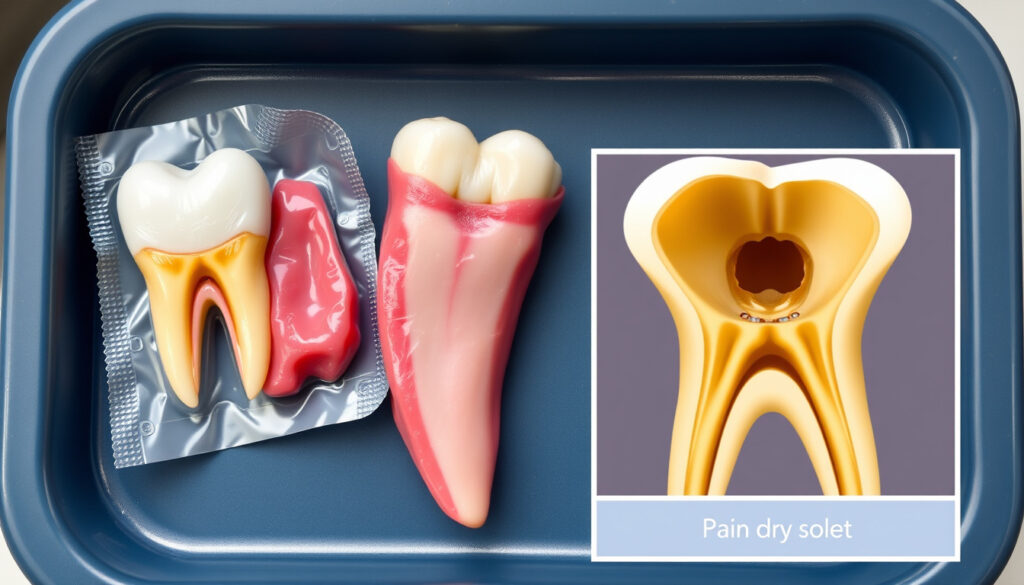
Normal Socket After Tooth Extraction vs Dry Socket: Healing & Red Flags
There’s a small, strange moment after a tooth extraction when you’re not sure if the ache is normal or a sign something’s gone wrong. That uncertainty is understandable—healing looks different from one day to the next, and the difference between a healthy socket and a dry socket isn’t always obvious.
Dry socket occurrence rate: 2–5% of all tooth extractions (Cleveland Clinic) ·
Normal socket healing time: 3 to 5 days for initial closure (Today’s Dental) ·
Peak risk day for dry socket: Day 3 after extraction ·
Clot dislodgement visible by: Exposed bone in the socket, usually around day 3
Quick snapshot
- Dry socket is caused by dislodgement of the blood clot (Adara Surgical Institute)
- Normal socket heals in 3–5 days for gum closure (Today’s Dental)
- Day 3 is the most common day for dry socket onset (Broda Family Dental)
- Smoking significantly increases dry socket risk (Broda Family Dental)
- Exact percentage of dry socket cases that self-resolve without treatment is not well documented
- Effectiveness of specific home remedies (e.g., clove oil) has limited clinical evidence
- Day 0–2: clot forms, mild pain peaks around day 2–3 (Broda Family Dental)
- Day 3–4: normal socket pain improves; dry socket pain worsens sharply (Adara Surgical Institute)
- Day 5–7: mucosal tissue covers socket; dry socket risk drops (Norwood Dental)
- Week 2–4: gum tissue closes, granulation tissue fills defect
- Several months: bone remodeling completes healing
Five key facts set the stage for understanding normal healing versus complications.
| Fact | Value |
|---|---|
| Normal socket initial healing | 3–5 days (Today’s Dental) |
| Full socket recovery | Several weeks to months for bone filling |
| Dry socket incidence | 2–5% of extractions (Cleveland Clinic) |
| Dry socket peak day | Day 3 |
| Risk window for dry socket | Day 2 to day 5 |
What Does a Healthy Socket Look Like After 3 Days?
Signs of a normal healing socket
- A dark red or maroon blood clot fills the socket within 24 hours and remains stable (Broda Family Dental (general dentistry practice))
- By day 3 the clot is still present, though it may appear smaller and more contracted
- No exposed bone is visible; the socket looks moist, not dry
- Mild pain that responds to over‑the‑counter medication and decreases day by day
What to expect day by day: day 2, day 3, day 4, day 5
- Day 2: Swelling and soreness peak; clot appears dark and firm
- Day 3: Pain begins to ease; clot may look grayish on the surface as healing progresses
- Day 4: Discomfort continues to subside; the socket starts to appear shallower as gum tissue grows over the clot
- Day 5: Most of the socket is covered by pink tissue; no bone visible
The pattern is steady improvement. If that slope reverses, something else is happening.
How Do I Know if It’s Dry Socket or Normal Pain?
Pain characteristics of dry socket vs normal pain
- Normal pain: mild to moderate, peaks day 2–3, then steadily declines (Broda Family Dental)
- Dry socket pain: severe, often radiating to the ear or neck, and does not respond to over‑the‑counter pain relievers (Adara Surgical Institute (oral surgery provider))
Other symptoms to look for
- Dry socket may cause a foul odor or unpleasant taste in the mouth
- The socket appears empty – a pale, dry hole with visible bone instead of a dark clot (Broda Family Dental)
- Bad breath that doesn’t improve with gentle rinsing
Severe pain that gets worse two to four days after extraction is the classic dry‑socket signal. Over‑the‑counter medications will not touch it, and delaying treatment prolongs the suffering.
The trade-off: normal healing means discomfort that fades; dry socket means pain that escalates. If your symptoms match the second pattern, call your dentist.
What Are the Red Flags After Tooth Extraction?
Signs of infection
- Fever (temperature above 100.4°F / 38°C)
- Swelling that increases after 48 hours rather than decreasing
- Pus or discharge from the socket (Adara Surgical Institute)
- Warmth and redness around the extraction site that spreads
Signs of dry socket
- Visible white or pale bone where the clot should be
- Pain that worsens 2–4 days after extraction
- Pain radiating to the ear, eye, neck, or temple
- Foul taste or bad breath (Adara Surgical Institute)
When to call your dentist
- Any of the infection or dry‑socket signs above
- Bleeding that soaks gauze beyond the first few hours or restarts heavily
- Numbness or tingling that persists beyond the local anesthetic
- Difficulty swallowing or breathing (emergency)
For a closer look at how infection can escalate, read How Long Until a Tooth Infection Kills You? Timeline & Signs (an adjacent guide on infection risks).
The implication: red flags rarely appear alone. When pain, bad taste, and visible bone show up together, you’ve likely crossed from normal healing into complication territory.
How to Prevent Dry Sockets After Tooth Extraction
Do’s and don’ts for the first 48 hours
- Don’t use a straw, spit, or smoke – suction dislodges the clot (Broda Family Dental)
- Don’t drink carbonated or hot beverages
- Don’t touch the socket with your tongue or fingers
- Do gently bite on gauze for the time recommended by your dentist
- Do rest with your head elevated to reduce swelling
Diet and activity restrictions
- Eat only soft foods (yogurt, applesauce, mashed potatoes) for the first few days
- Avoid crunchy, sticky, or hard foods that could disturb the site (Oral Surgery Athens (oral surgery practice))
- No heavy lifting or strenuous exercise for at least 48 hours
Proper oral hygiene
- After the first 24 hours, gently rinse with warm salt water (½ teaspoon salt in 8 oz water) (Norwood Dental)
- Brush other teeth carefully, avoiding the extraction site
- Keep the area clean but do not direct water pressure into the socket
Smoking is the single biggest modifiable risk factor. The suction and chemicals together can collapse the clot, and studies show smokers are 3–4 times more likely to develop dry socket than nonsmokers.
Prevention is largely common sense wrapped in discipline. Follow these rules for one week, and your odds of a smooth recovery are excellent.
What Are the Riskiest Days for Dry Socket?
Why day 3 is the peak risk
Dry socket most commonly appears 2–4 days after extraction, with day 3 as the highest‑risk moment (Broda Family Dental). By then the initial clot has either incorporated into the wound or become dislodged. If the clot is gone, the exposed bone triggers intense pain that usually prompts a dental visit.
How long does the risk last?
After 5–7 days, mucosal tissue begins to cover the socket, dramatically reducing the risk of dry socket (Norwood Dental). Some oral surgeons say the wound is effectively healed in 7–10 days and the risk window closes once the gum seals (Oral Surgery Athens). So if you’ve made it through day 5 without severe pain, you can breathe easier.
The pattern: the danger is front‑loaded. The first week demands the most vigilance.
Six points of comparison help cement the differences between normal healing and dry socket.
| Feature | Normal socket | Dry socket |
|---|---|---|
| Pain trajectory | Peaks day 2–3, then decreases (Broda Family Dental) | Worsens 2–4 days after extraction, often severe and radiating (Adara Surgical Institute) |
| Appearance | Dark red/maroon clot; no bone visible | Pale or gray base; exposed white bone (Broda Family Dental) |
| Taste/odor | Normal or slightly metallic | Foul taste or bad breath (Adara Surgical Institute) |
| Response to OTC pain relievers | Relieves pain | Little to no relief |
| Timing of onset | Pain begins immediately and improves | Pain appears or worsens 2–4 days later |
| Need for treatment | Routine self‑care | Dentist intervention (medicated dressing) required |
The catch: normal healing and dry socket can feel similar on day 2. By day 3, the fork in the road becomes unmistakable.
Healing Timeline: Day by Day
| Day / Period | What happens |
|---|---|
| Day 0 (extraction) | Blood clot forms; gauze placed to control bleeding |
| Day 1–2 | Mild pain and swelling; clot stabilizes. Normal socket begins healing (Broda Family Dental) |
| Day 3–4 | Peak risk for dry socket. Normal socket pain improves; dry socket pain worsens (Adara Surgical Institute) |
| Day 5–7 | Mucosal tissue covers the socket; risk of dry socket drops significantly (Norwood Dental) |
| Week 2–4 | Gum tissue closes over socket; granulation tissue fills the defect |
| Several months | Bone remodeling completes the healing process |
The implication: the first week demands the most caution. After that, time is on your side.
What We Know vs What’s Unclear
Confirmed facts
- Dry socket is caused by dislodgement of the blood clot (Adara Surgical Institute)
- Normal socket heals in 3–5 days for gum closure (Today’s Dental)
- Day 3 is the most common day for dry socket onset (Broda Family Dental)
- Smoking significantly increases dry socket risk (Broda Family Dental)
What’s unclear
- Exact percentage of dry socket cases that self-resolve without treatment is not well documented
- Effectiveness of specific home remedies (e.g., clove oil) has limited clinical evidence
The balance: the core science is solid. What’s missing are precise numbers on natural resolution and alternative therapies – gaps that don’t affect the standard clinical advice.
“Dry socket occurs when the blood clot fails to form or is dislodged, exposing the underlying bone and nerves.”
“Normal socket healing is characterized by a stable blood clot, gradual pain reduction, and no visible bone. If you see bone or pain escalates after a few days, you’re likely dealing with dry socket.”
Medical News Today (health information publisher)
“Patients should avoid smoking, straws, and vigorous spitting for the first week to protect the clot. Keeping the area clean with gentle salt water rinses after 24 hours helps prevent infection.”
American Dental Association (professional dental association)
Three sources, one message: protect the clot, watch for worsening pain, and when in doubt, call your dentist.
For anyone recovering from a tooth extraction, the choice is clear: follow your dentist’s post‑op instructions to the letter, or face the risk of a painful setback. A week of caution buys you a smooth recovery – and peace of mind.
Frequently asked questions
Can I eat normally after tooth extraction?
Stick to soft foods for the first few days. Gradually reintroduce solid foods as comfort allows, but avoid chewing directly on the extraction site until the gum has healed.
How long should I avoid using a straw?
At least 48 hours, and preferably a full week. Suction from straws is one of the most common ways to dislodge the blood clot.
Is it normal to have a bad taste in my mouth after extraction?
A mild metallic taste from the blood clot is normal. But a foul, persistent bad taste – especially if accompanied by pain – may signal dry socket or infection and should be evaluated.
When can I brush my teeth near the extraction site?
After 24 hours you can gently brush the surrounding teeth, but avoid the socket itself for about a week. Use a soft‑bristled brush and be careful not to disturb the clot.
Does dry socket heal on its own?
Some mild cases may eventually resolve, but the pain is usually so severe that dental treatment (medicated dressing) is needed. Self‑resolution is not reliably documented.
What does a dry socket taste like?
Patients often describe a foul, rotting taste that doesn’t go away with rinsing. It’s caused by food debris and bacteria settling in the exposed socket.
Can I drink coffee after tooth extraction?
Hot beverages can dissolve or disturb the clot. Wait at least 48 hours, and then drink only lukewarm coffee. Avoid carbonated drinks entirely for the first week.
For more on supporting your body’s healing, see How to Treat Swollen Lymph Nodes in Neck Naturally – relevant because lymph nodes may swell as a normal immune response after extraction.
More related posts
 Grocery Chain Closing Locations: What to Know in 2026
 Elf (Film): Where to Stream in 2025, Cast, Kids Guide
 Hard Words to Spell: 100 Commonly Misspelled Words
 Partidos de la Liga: 2025-26 Schedule, Today’s Matches & Dates
 Pirates vs Cardinals Player Stats: Live Game Recap & Box Score
 Watch Detroit Tigers vs Cleveland Guardians (June 13)
 New York Yankees vs Tampa Bay Rays Match Player Stats May 24
 Tudor Black Bay 58 Review: Worth It? Price & Value Retention