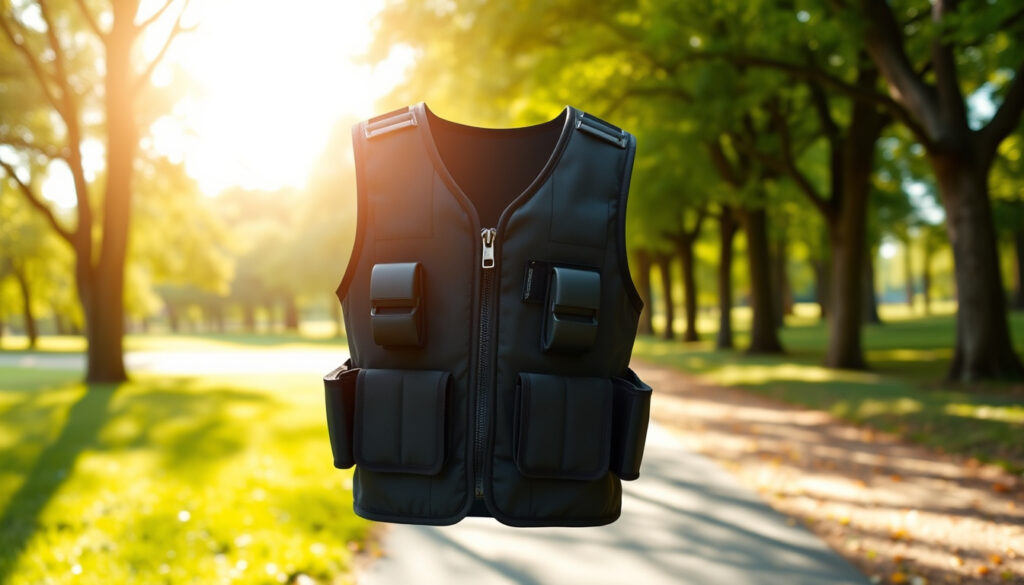
Weighted Vest for Walking: Benefits, Weight Guide & Tips
Weighted vest walking delivers measurable benefits: research confirms up to 40% increases in energy expenditure and genuine gains in cardiovascular health, muscle engagement, and bone density when performed correctly. Here’s what you need to know before strapping one on.
Starting weight recommendation: 5–10% of body weight ·
Common use cases: walking, push-ups, squats ·
Tester duration examples: 1 week to 1 month ·
Key benefit reported: increased heart rate during brisk walks ·
Fitness level suitability: any level with adjustable vests
Quick snapshot
- Increases energy expenditure by up to 40% during walking (Men’s Health UK)
- Boosts heart rate and cardiovascular intensity during brisk walks (Women’s Health Magazine)
- Targets core muscles in addition to legs, hips, and glutes (Atlantic Health)
- Exact weight loss timelines without accompanying dietary changes
- Safe usage parameters for individuals with scoliosis without personalized medical consult
- Long-term effectiveness compared to structured resistance training programs
- Weighted vests emerged as a mainstream fitness trend in the 2020s
- Studies from University of Gothenburg and Wake Forest School of Medicine published pre-2024
- Multiple major fitness publications published comprehensive guides in 2024
- Adjustable vest technology continues expanding accessibility for all fitness levels
- Medical community increasingly recognizing low-impact strength benefits
- Growing interest in combining weighted walking with bodyweight progressions
The specification table below summarizes key parameters sourced from health institutions and fitness publications.
| Specification | Details |
|---|---|
| Primary Use | Walking, bodyweight exercises |
| Adjustability | Yes, for all fitness levels |
| Tester Feedback | Benefits after 1–2 weeks |
| Sources Mentioned | UCLA Health, ABC News |
| Maximum Weight Recommendation | 10% of body weight for beginners |
| Starting Weight for Complete Beginners | 5% of body weight |
| Maximum Recommended Frequency | 3 times per week |
| Example Weight for 150-lb Person | 7–15 pounds depending on experience |
Are weighted vests good for walking?
Yes—and the benefits go beyond just burning a few extra calories. Weighted vests add a legitimate strength-training element to walking by increasing workload on leg, glute, and core muscles while keeping the low-impact nature of the activity intact.
Benefits for muscle work and steps
The extra weight forces your muscles to work harder with every step. According to Women’s Health Magazine (fitness publication), this means your legs, glutes, and core all get recruited more intensely than during a regular walk. A sports medicine orthopedic surgeon at UCLA Health confirms that loading joints with additional weight helps build muscle strength and endurance in the lower extremities.
Beyond the obvious leg workout, weighted vests force core engagement to maintain stability—a double win for posture. Research from Atlantic Health (healthcare provider) notes that this added resistance helps improve bone density by adding stress to the skeletal system.
Low-impact advantages
Unlike running or high-intensity interval training, weighted vest walking remains gentle on joints while still providing cardiovascular challenge. This makes it particularly valuable for people returning to exercise or those managing joint sensitivity. The vest distributes weight evenly across the torso, making it safer than holding hand weights or strapping on ankle weights, according to UCLA Health.
“Walking with a weighted vest can help you build more strength and endurance than walking alone can. But you need to be careful and build up to it slowly to avoid injury,” says Dr. Sharon Hame, a sports medicine orthopedic surgeon at UCLA Health.
For anyone stuck in a fitness plateau, weighted vest walking offers a way to increase workout intensity without impact stress—something runners and joint-conscious exercisers often struggle to achieve.
How heavy should a weight vest be for walking?
Getting the weight right matters more than going heavy. Start too heavy and you’ll sacrifice form; start too light and you miss the benefit entirely.
Starting weight guidelines
Multiple health authorities align on the same range. Women’s Health Magazine recommends beginners start with no more than 10% of body weight, while complete beginners should begin around 5% of body weight. UCLA Health confirms this 5% starting point as a recommended baseline.
For context: a 150-pound person would start with 7 to 7.5 pounds at the 5% mark, scaling up to 15 pounds at 10%. Atlantic Health cites 5–10% of body weight as a good starting range for general fitness users.
Progression rules
The key is incremental progression. Adjustable weight vests allow you to add small increments as your body adapts—typically 1 to 2.5 pounds at a time. UCLA Health specifically recommends adjustable vests for this purpose.
Atlantic Health recommends wearing a weighted vest no more than three times per week to allow recovery. If you find yourself changing how you walk or shifting weight to compensate, the vest is likely too heavy.
More weight accelerates gains—but also accelerates injury risk if progression outpaces your body’s adaptation capacity. Patience here pays dividends over months, not weeks.
The catch: the safest progression is also the slowest, which requires accepting that incremental gains compound over time rather than delivering immediate results.
Should you walk with a weighted vest?
The answer depends on your goals, current fitness level, and any existing health conditions. For most people, the benefits outweigh the risks—when approached sensibly.
Expert recommendations
Medical professionals increasingly endorse weighted vest walking for appropriate users. Dr. Sharon Hame at UCLA Health calls it “fantastic when done properly” and notes it progresses bodyweight movements effectively. The Atlantic Health team highlights bone health benefits for those without contraindicating conditions.
Fitness experts quoted in Women’s Health Magazine note that the extra weight “increases cardiovascular intensity, build strength, and improve bone density”—making it versatile for varied fitness goals.
UCLA Health insights
The medical perspective emphasizes safety through proper fit and gradual progression. According to UCLA Health, weighted vests are safer than rucksacks for people with stability or back concerns because they keep weight centered and close to the body’s core.
However, Women’s Health Magazine warns that prolonged use—several hours—can lead to joint strain, muscle fatigue, and posture issues if the weight is too heavy or worn too long. Pregnant women should avoid weighted vests entirely due to lower back and abdomen strain risk.
If you’re generally healthy, have no joint problems, and can commit to starting light with gradual progression, weighted vest walking is a legitimate tool for increasing workout intensity—particularly if you’re looking to progress beyond normal walking cardio.
What this means: the decision framework is straightforward—clear health status plus conservative start equals appropriate use, while any uncertainty requires professional input first.
What is the downside of a weighted vest?
No fitness tool is without trade-offs. Understanding the risks helps you use weighted vests safely and sustainably.
Potential risks
Overdoing weighted vest walking can lead to joint strain—particularly in knees, hips, and lower back, according to Women’s Health Magazine. Improperly fitted or overly heavy vests can cause hunching forward and alter your natural walking gait, which defeats the posture benefits you’re trying to achieve.
Extended wear also causes discomfort or chafing around shoulders and chest. Without proper progression, overtraining injuries like muscle strains or tendonitis become realistic possibilities.
Pros and cons overview
High-quality research on weighted vests and weight loss specifically is limited, according to Women’s Health Magazine. They note that weighted vests deliver “incremental, not transformational” calorie burn improvements. For meaningful weight loss, nutrition changes and resistance training remain essential—vest walking alone won’t move the needle dramatically.
Upsides
- Increases workout intensity without impact stress
- Builds endurance and cardiovascular capacity
- Engages core and improves posture
- Boosts bone density through skeletal loading
- More even weight distribution than hand or ankle weights
- Suitable for beginners with adjustable models
Downsides
- Joint strain risk if worn too heavy or too long
- Gait alteration with improper fit or excess weight
- Not effective for toning without existing muscle mass
- Limited standalone impact on weight loss
- Chafing and discomfort with extended wear
- Overtraining injuries without proper progression
The implication: the risk profile scales directly with weight and duration—keeping both conservative protects against the most common failure modes.
Is a weighted vest ok for scoliosis?
This is where individual circumstances matter most—and where the safest answer is to get professional input before starting.
Medical considerations
People with existing joint problems such as arthritis should consult healthcare providers before using weighted vests, according to Women’s Health Magazine. The same cautious approach applies to scoliosis: adding asymmetric load to an already compromised spinal structure requires personalized assessment.
People with osteoporosis should be particularly cautious with weighted vests due to increased fracture risk with improper use, notes Women’s Health Magazine.
Complete guide points
If you have scoliosis or any spinal condition, the decision isn’t black-and-white. Some individuals with mild scoliosis use weighted vests without issue; others with more pronounced curves may find the added load uncomfortable or counterproductive. A physical therapist or orthopedic specialist can assess your specific curve pattern and recommend whether weighted vest walking fits your situation.
The key factors: curve severity, presence of pain, current fitness level, and whether your healthcare provider has cleared additional load-bearing exercise. Don’t guess—get an assessment first.
If you experience back pain, discomfort, or notice posture changes while wearing a weighted vest, stop immediately. These are signals that the load is not well-suited to your current condition—regardless of how good the exercise science looks on paper.
The pattern: spinal conditions demand individualized assessment because the asymmetric loading that benefits healthy spines can aggravate existing misalignments.
How to start: A safe walking integration plan
Practical steps help you integrate weighted vest walking without overcommitting before your body is ready.
- Get cleared if needed. If you have any joint problems, back issues, osteoporosis, or are pregnant, consult a healthcare provider first.
- Choose your vest. Select an adjustable model that allows incremental weight additions. This is critical for safe progression.
- Start at 5% of body weight. For a 150-pound person, that’s roughly 7–7.5 pounds. Wear the vest for 10–15 minutes initially to assess comfort.
- Walk at a comfortable pace. Focus on maintaining natural gait. If you find yourself adjusting your stride, reduce weight or remove the vest.
- Progress gradually. Add 1–2.5 pounds every 1–2 weeks if recovery feels good. Cap at 10% body weight for general fitness use.
- Limit sessions to 3 times per week. Allow rest days for muscular recovery. More is not better when starting out.
- Monitor for warning signs. Joint pain, gait changes, chafing, or unusual fatigue are signals to reduce weight or take a break.
- Combine with nutrition if weight loss is your goal. Vest walking alone offers incremental benefits—nutrition changes drive the primary results.
“Walking with a weighted vest can help you build more strength and endurance than walking alone can. But you need to be careful and build up to it slowly to avoid injury.”
— Dr. Sharon Hame, Sports Medicine Orthopedic Surgeon at UCLA Health
“The extra weight increases the workload on muscles in the legs, glutes, and core, effectively blending strength training into a low-impact cardio routine.”
— Fitness expert quoted in Women’s Health Magazine
“If you find that you have to change how you walk or you shift your weight around when wearing a vest, it’s probably too heavy.”
— Rehabilitation professional at Atlantic Health
Bottom line
Weighted vest walking works—when you respect the limits. Starting at 5–10% of body weight, progressing slowly, and limiting sessions to three times per week keeps the benefits flowing while minimizing injury risk. For generally healthy people looking to add intensity to low-impact cardio, it’s a legitimate tool. For those with joint problems, back issues, or conditions like scoliosis, professional guidance isn’t optional—it’s necessary.
Related reading: Signs of Low Blood Sugar: Symptoms, Causes & Treatment · How Much Magnesium Per Day – RDA for Men, Women and Supplements
health.harvard.edu, womanandhome.com, aarp.org, iowaortho.com
Frequently asked questions
What is the rule for weighted vests?
The general rule is to start with 5–10% of your body weight, progress gradually, and wear the vest no more than three times per week. If your gait changes or you feel joint discomfort, the weight is too heavy.
Can weighted vests help lose 10 pounds?
Weighted vest walking increases calorie burn incrementally, but research shows it’s not transformational for weight loss alone. Nutrition changes combined with consistent exercise—vest walking included—drive primary results. Expect modest contributions, not dramatic transformations.
What are the best weighted vests for walking?
The best weighted vest for walking is one that’s fully adjustable, fits securely without shifting, and allows small incremental weight additions. Look for models with even weight distribution across the torso for safety and comfort.
Are weighted vests safe for beginners?
Yes, with the right approach. Start at 5% of body weight, keep sessions short initially, and progress slowly. Get medical clearance if you have any joint problems, back issues, or are pregnant.
How do weighted vests work for endurance?
By adding resistance to every step, weighted vests increase cardiovascular demand and force greater muscle recruitment. Over time, this conditions your cardiovascular system and leg muscles to handle greater workloads—improving endurance for regular walking and other activities.
Where to buy a weighted vest for walking?
Weighted vests are available at major sporting goods retailers, fitness equipment stores, and online marketplaces. Look for adjustable models from reputable fitness brands. If in Ireland or the UK, Decathlon and specialty fitness retailers carry options.
What did people learn from wearing a weighted vest for a month?
Tester experiences shared in fitness publications indicate benefits become noticeable after 1–2 weeks of consistent use. Users report increased workout intensity and cardiovascular challenge. Key lessons: start light, progress slowly, and listen to your body for signals about when to add weight or take breaks.
Can you wear a weighted vest with scoliosis?
Wearing a weighted vest with scoliosis requires professional clearance first. The asymmetric spinal curvature means added load could aggravate the condition—or it may be fine depending on curve severity and location. A physical therapist or orthopedic specialist can assess whether weighted vest walking suits your specific situation.
More related posts
 Where to Watch Texans vs New England Patriots: TV, Stream, Radio
 US Life Expectancy 2024: Data, Trends, Comparisons
 Tini Mac and Cheese Recipe: Viral TikTok Layers of Cheese
 Who Moved My Cheese – Summary, Lessons and Key Takeaways
 New York Yankees vs Tampa Bay Rays Match Player Stats May 24
 Jelly Roll Save Me: Song Meaning, Lyrics & Redemption
 Houses for Sale Under €400k: Affordable Irish Listings